Wheel Loader Attachments
Start with what you're moving. Bulk material, palletized loads, loose scrap, and snow each point to a different tool. Which one your loader can carry depends on the machine in your yard, not the model name, so check its linkage, counterweight, and tires before you compare attachments.
Start with what you're moving. Bulk material, palletized loads, loose scrap, and snow each point to a different tool. Which one your loader can actually carry depends on the machine in your yard, not the model name — tires, ballast, linkage, and the attachments already installed can all change what the loader is rated to handle. 1
Attachment types to consider
We feature four families of wheel-loader attachments: buckets, forks and carriages, grapples, and snow tools. 2 Attachments within a family still differ in mount, size, weight, and what powered functions they need. Picking the family narrows your search — it doesn't tell you an attachment fits.
Buckets
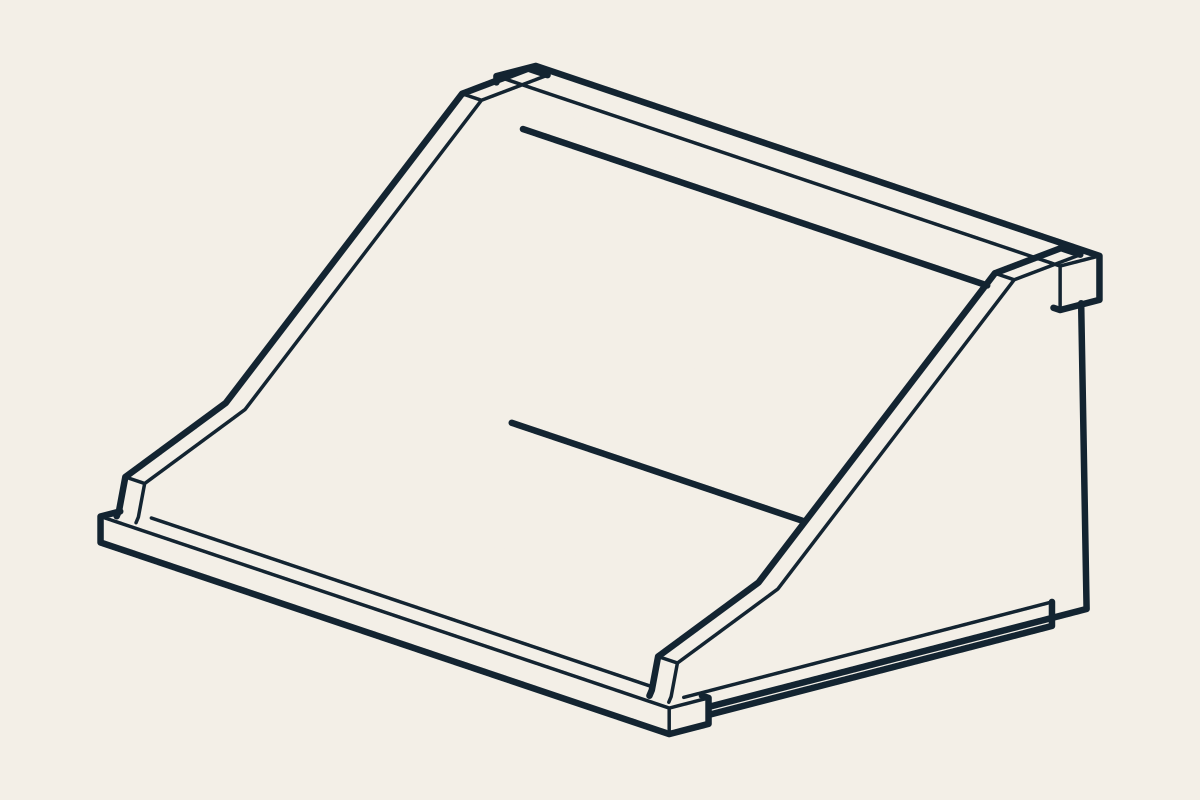
Start here for: load, stockpile, excavate, carry, or dump bulk material.
Pick a bucket when the job is to load, stockpile, excavate, carry, or dump bulk material like dirt, gravel, or aggregate. The right form of bucket depends on the material and the job. 3
Forks and carriages
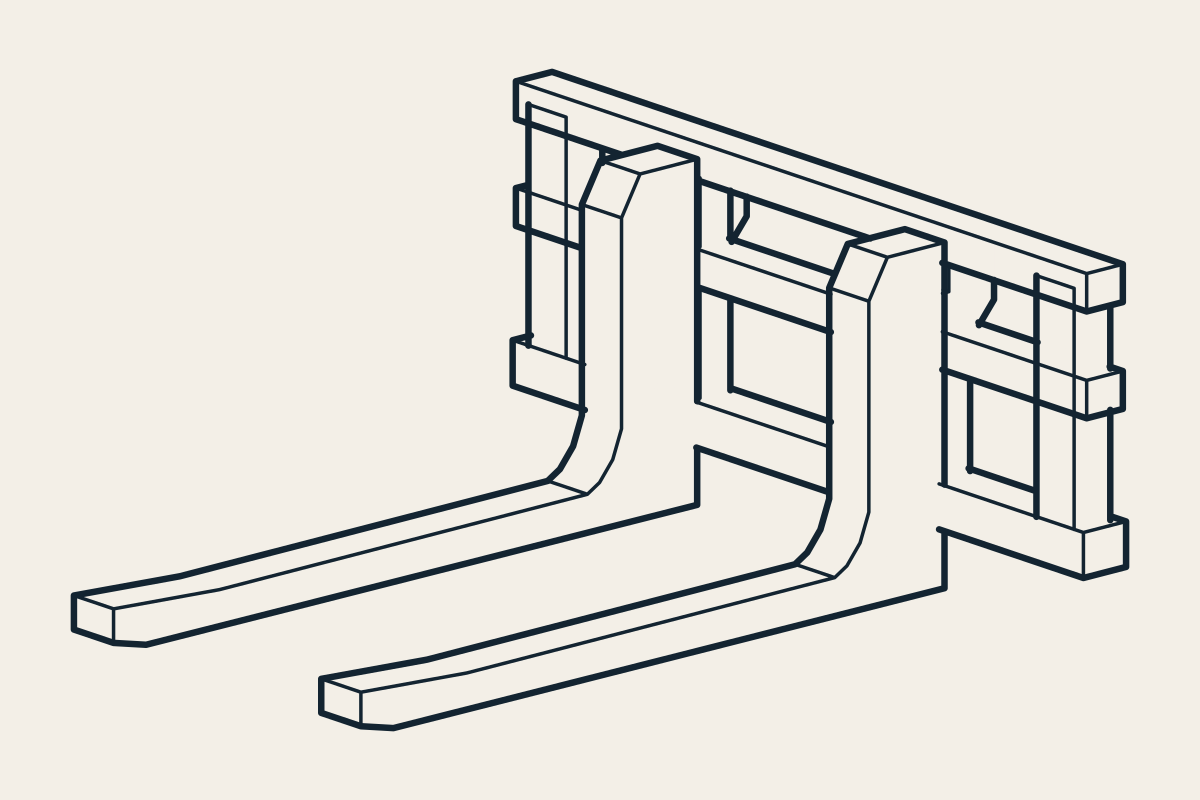
Start here for: moving palletized loads, blocks, lumber, pipe, or poles that get lifted from below.
Pick forks and a carriage when you're moving palletized loads, blocks, lumber, pipe, or poles that get lifted from below. The right fork form depends on the material-handling job. 4
Grapples
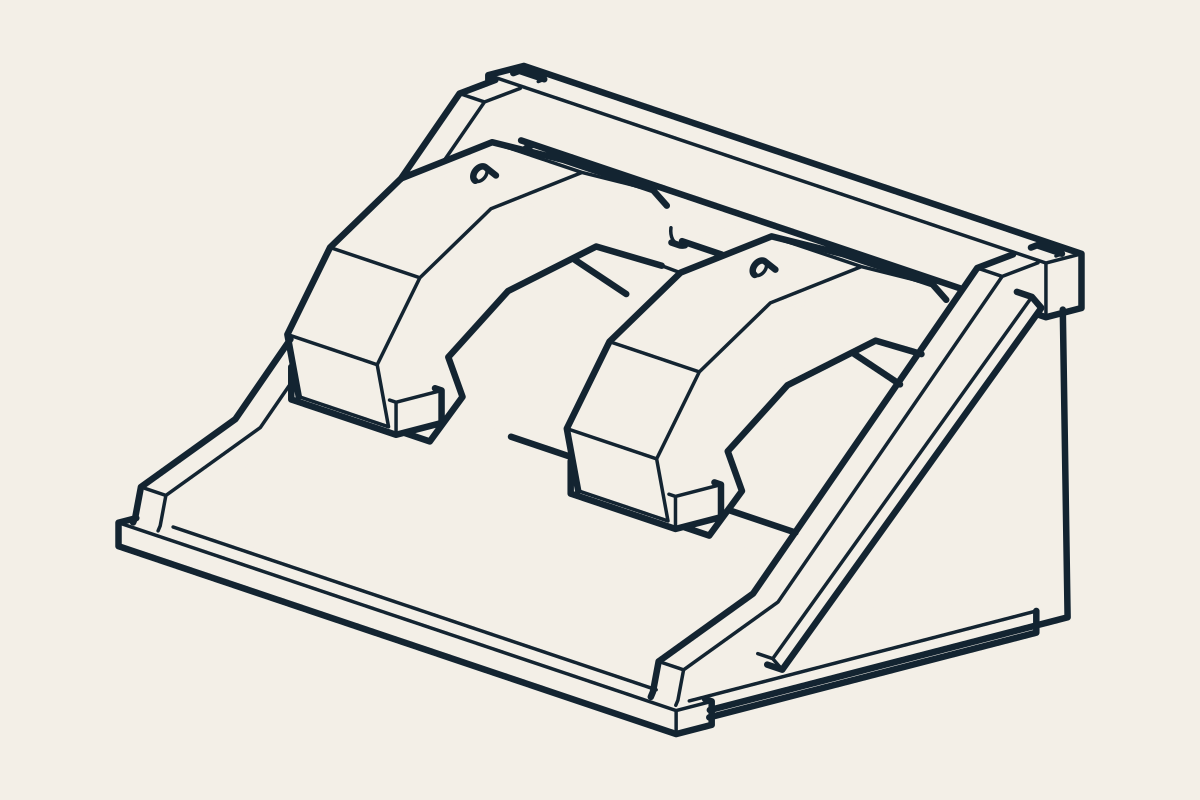
Start here for: irregular brush, scrap, logs, waste, rock, or other loose material.
Pick a grapple for irregular brush, scrap, logs, waste, rock, or other loose material that a flat bucket or forks can't contain well.
Snow tools
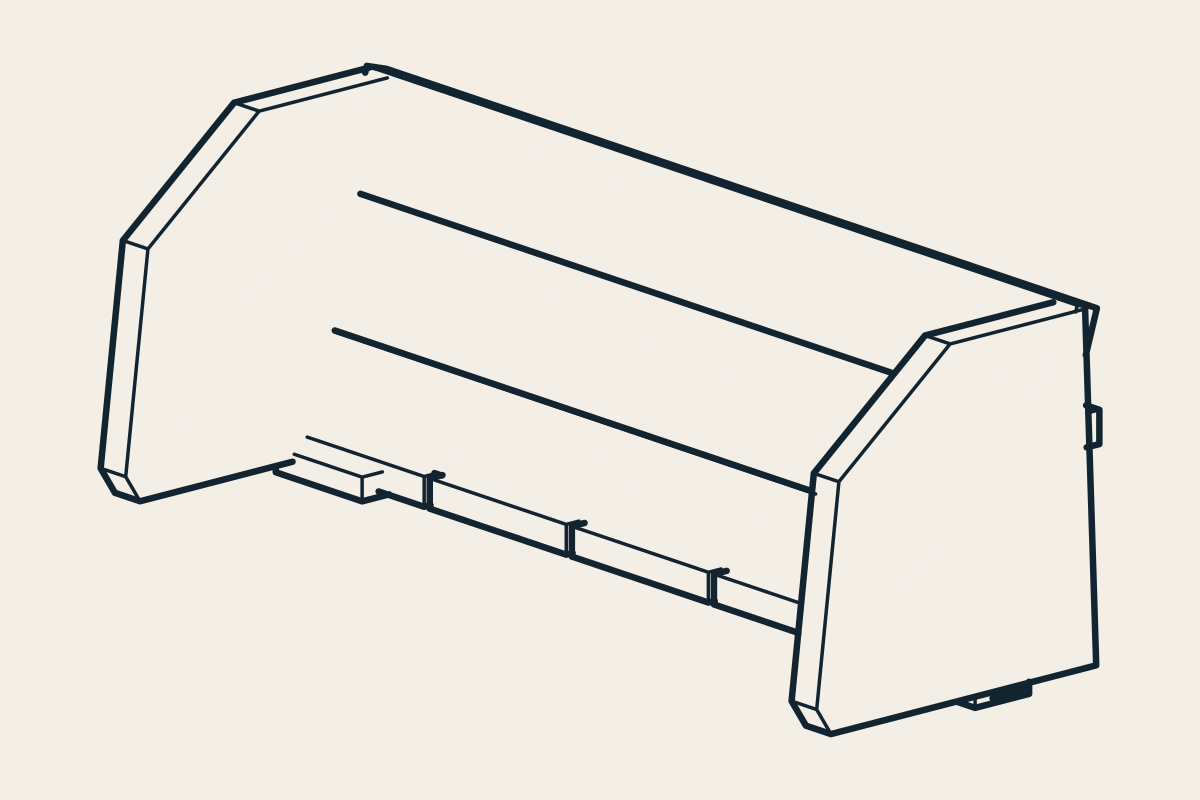
Start here for: contain, windrow, cast, or load snow.
Pick a snow tool when the job is to contain, windrow, cast, or load snow along a site or route. Mass, mount, hydraulics, and controls all depend on which attachment you're comparing. 5
Prepare your quote
What changes the choice
Start with the task, the material or load, and the result you need. Those facts point you to an attachment family. Then compare attachments against your exact machine and how it's set up before you ask a supplier to confirm the fit.
| What you're moving | Start with | What changes the quote |
|---|---|---|
| Bulk material | Buckets | Material and sourced density, bucket form, capacity method, fill assumption, width, mass, mount, dump target, edge and wear package |
| Loads on pallets or bundles | Forks | Load weight and dimensions, load center, tine length/section/spacing, carriage form, retention, mount, weight, visibility |
| Loose, irregular material | Grapples | Material shape, lower floor or tine geometry, jaw form/opening, clamp or rotation functions, hydraulics, mass, retention, visibility |
| Snow | Snow tools | Site and route, snow condition, containment versus discharge, working and angled width, edge/trip system, hydraulics and controls, seasonal timing |
What we need for useful quotes
Your quote depends on the machine, the mount, what the attachment needs to do, and how you'll get it delivered. Send the supplier these details so they can look at one clear setup.
- Make, model, model year, and serial number or range — Points to the right machine record, production breaks, and option packages.
- Machine class as the maker designates it — Points to the right size class, not a guessed band.
- Operating weight and how the machine is set up — Tells the supplier which configuration they're looking at.
- Mount or quick coupler — Name, who makes it and its version, plus mating geometry, latch, stops, and clearance.
- Tipping load, lift capacity, and breakout force, each with its source and conditions — These stay separate figures; none alone sizes a bucket.
- Counterweight, tires, ballast, and linkage or boom options — These can change the published machine numbers. 1
- Hydraulic flow, pressure, circuit, and controls — Needed before ordering a powered tool, so the supplier can confirm it matches.
- Electrical connectors and control functions — What's already wired on the machine.
- Visibility limits and camera or lighting setup — The tool and load can change the operator's view.
Send the serial number as part of your profile, but keep it private in the quote request. Tell the supplier the destination and how you plan to unload — packaged dimensions and weight can differ from the operating numbers. See Common mistakes below for what trips up loader quotes most often.
Details on each of these are in the four things that have to line up and the freight and delivery checklist.
Common mistakes
Keep loader terms in separate records. Record tipping load, lift capacity, and breakout force each with its source and the conditions it was measured under; don't swap one for another. Don't use a fork or grapple rating in place of your loader's own capacity and stability check. Record the attachment's actual weight and its forward center of gravity, especially for a carriage, grapple, high-dump bucket, or snow tool. Before you order a powered tool, confirm the flow, pressure, circuit, return and backpressure, controls, and hose routing. Before you pick the widest tool, check turning clearance, tire path, route width, visibility, transport, and the job's geometry.
Use the attachment matching guide for mistakes that apply to every machine and attachment; keep the loader-specific checks above with this quote request.
Scope
Use this page to pick an attachment type and put together a useful quote request for compact and full-size wheel loaders in the U.S. market. It won't tell you whether a specific attachment fits your machine.
Frequently asked questions
Does a matching coupler name mean an attachment fits?
Not on its own. Knowing the coupler name isn't enough — you also need who makes it and which version it is. From there, mating geometry, latch, clearance, attachment weight, machine capacity, hydraulics, and the maker's own documentation all still need checking. A supplier needs to confirm this. Check the maker's or dealer's document for capacity and stability, and route hydraulic questions through qualified review.
Can I pick a bucket from cubic yards alone?
Not from cubic yards alone. Record the material density, how full you plan to fill the bucket, the bucket's own weight, and your loader's applicable capacity chart before you compare sizes. See how to size a wheel-loader bucket. Record how the loader is set up, the mount, the maker's selection method, bucket width, and dump target as well. The sizing worksheet organizes this evidence, but it doesn't replace the maker's bucket chart.
Can I use the fork's rating as my loader's capacity?
Not by itself. The fork's rating and the loader's capacity describe different limits, and the usable combination depends on how your machine is set up and your load center. Review the mount, the attachment and load geometry, the working conditions, and the maker's own documentation as separate inputs. Route capacity and load-chart questions to the maker's or dealer's document and qualified review before you request a quote.
What identifies my loader on a quote request?
Provide the make, model, model year, linkage or boom configuration, mount, counterweight, tires and ballast, relevant capacity, tipping and breakout data, and installed hydraulic and electrical options. Build that profile from the machine's data plate, current operator manual, spec sheet, and your installed options. Include the serial number, but keep it private in the quote request and supplier workflow.
Get a quote
Ready for a quote?
Tell us your machine and the job. We'll take it from there.
Sources
The markers in the text link to the sources below.
- 1John Deere444 P-Tier Mid-Size Wheel Loader
- 2CaterpillarCompact Wheel Loader Attachments
- 3CaterpillarSelecting the Best Wheel Loader Buckets
- 4CaterpillarWheel Loader Fork Options for Any Job
- 5CaterpillarSR121 Snow Blower