Skid Steer and Compact Track Loader Attachments
Pick the attachment from the job, then check that it fits your exact machine. Loading and grading point to buckets, clamping material to grapples, clearing vegetation to cutters and mulchers, and boring or trenching to augers and trenchers.
Start with the job you need to do, then check that the attachment works with your exact machine. For a useful quote, record the material and job, the machine's make, model, year or serial range, mount, auxiliary hydraulic flow and pressure, and the attachment weight. Powered tools may need a specific circuit, return path, case drain, controls, cooling, guarding, or option package. A familiar mounting plate or a "standard flow" or "high flow" label does not prove the whole combination works. 3 5
Attachment types to consider
Buckets
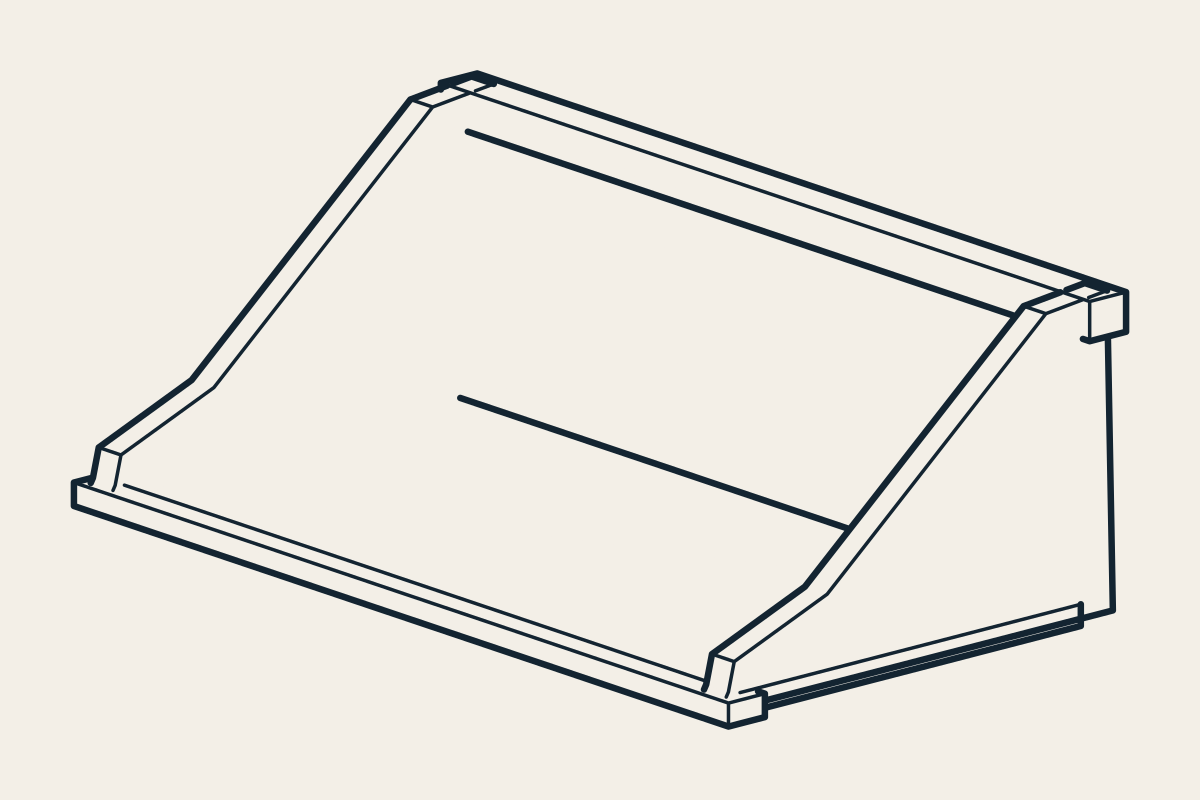
Start here for: loading, digging, grading, or moving loose material.
Buckets are for loading, digging, grading, and handling loose material. The quote depends on the material and its density, width, how capacity is measured, bucket weight, edge and teeth, and whether the bucket has powered functions. 1 Compare skid-steer and CTL buckets.
Grapples
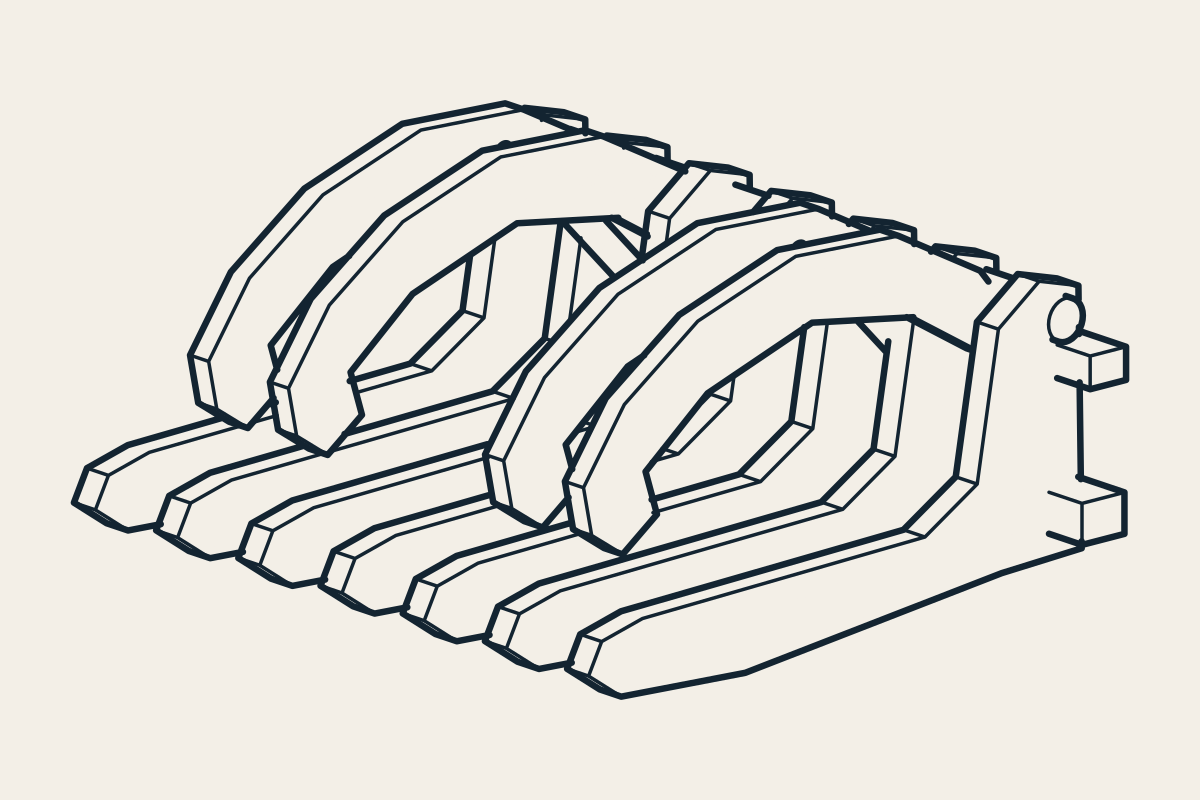
Start here for: clamping brush, roots, rock, demolition debris, or irregular loads.
Grapples are for clamping brush, roots, rock, demolition debris, and irregular loads. The quote depends on what has to be held or sifted, the lower-floor shape, jaw form and opening, width, weight, and auxiliary hydraulic needs. 2 Compare skid-steer and CTL grapples.
Brush cutters and mulchers
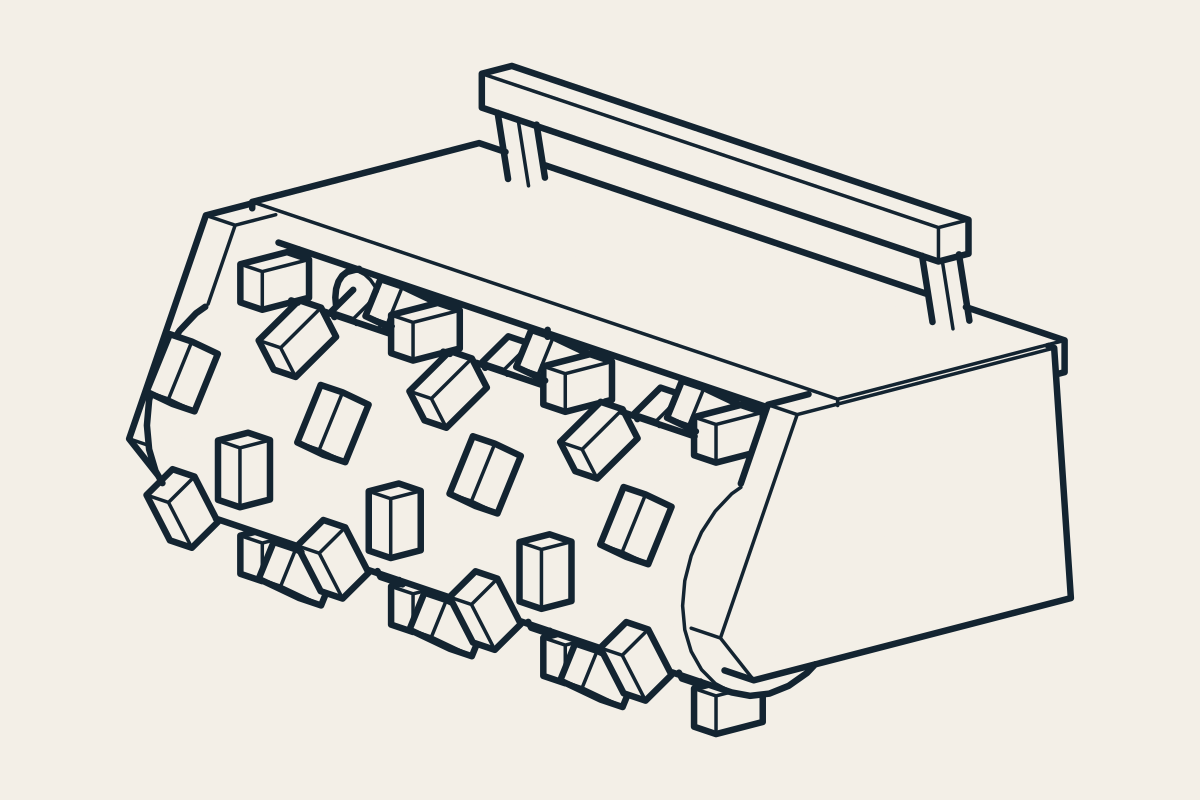
Start here for: mowing vegetation, reducing brush, or processing woody material.
Brush cutters and mulchers mow vegetation, reduce brush, and process woody material. The quote depends on the vegetation and the finish you need, the hydraulic setup, motor and plumbing, cooling, machine weight, duty cycle, and guarding. Compare skid-steer and CTL brush cutters and mulchers.
Augers and trenchers
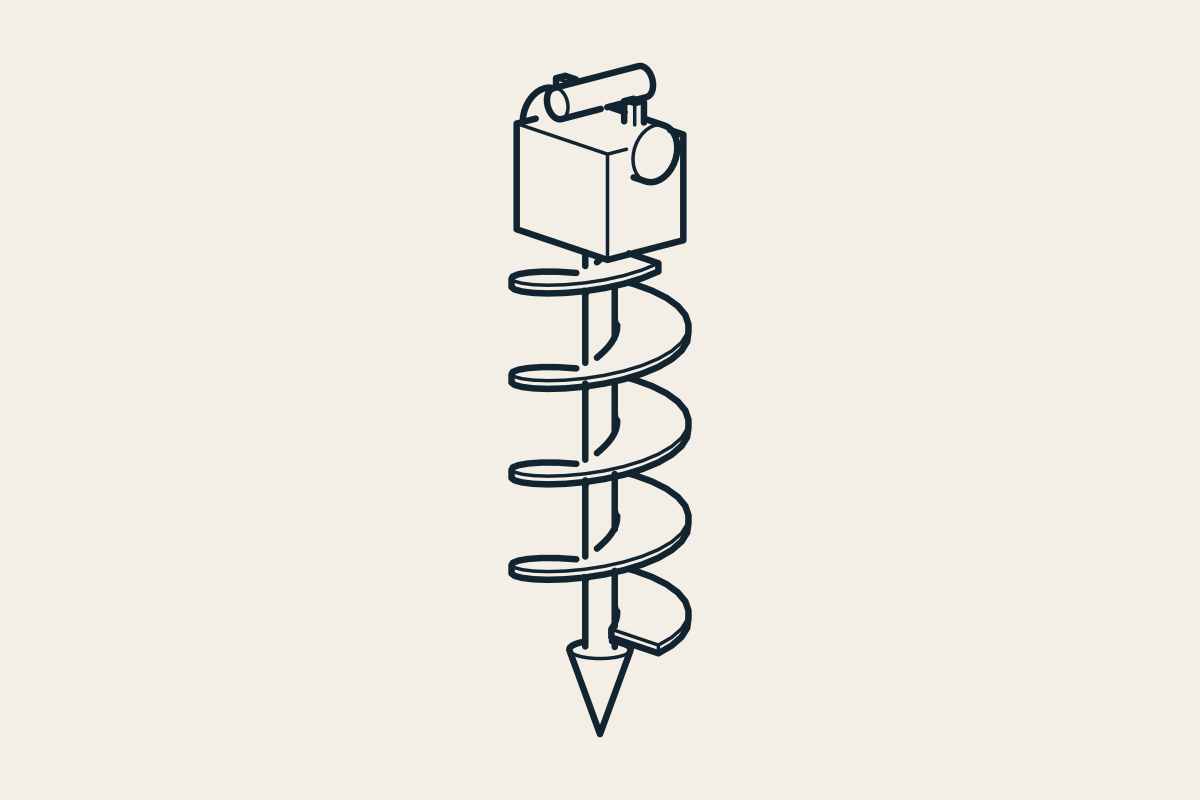
Start here for: boring individual holes or opening a continuous trench.
Augers bore individual holes; trenchers open a continuous trench. For augers, the quote depends on hole diameter and depth, soil, drive output, bit and teeth, mount, and hydraulics. For trenchers, it depends on trench width and depth, soil, chain and teeth, boom and side-shift setup, spoil handling, and site limits. 3 4 Compare skid-steer and CTL augers and trenchers.
Prepare your quote
What changes the choice
Pick the category from the job first, then confirm the attachment fits your machine before you buy it. 1 2 3 4
| What you're doing | Start with | What changes the quote |
|---|---|---|
| Loading, digging, grading or handling loose material | Buckets | Material and density, form, width, capacity method, weight, edge and teeth |
| Clamping brush, roots, rock or debris | Grapples | What must be held or sifted, lower-floor shape, jaw opening, weight, hydraulics |
| Mowing, brush reduction or mulching | Brush cutters and mulchers | Vegetation and finish, hydraulic setup, cooling, machine weight, duty cycle, guarding |
| Boring holes or opening a trench | Augers and trenchers | Diameter, depth or trench width, soil, drive output, bit or chain, mount, hydraulics |
These four are a good starting point, not the whole market.
What we need for useful quotes
Have your machine data ready before you request quotes. Pull the numbers from the data plate, the operator's manual, and the spec sheet. Giving us these numbers helps us match your request — it doesn't mean a part fits your machine.
- Make and model (required) — Tells the supplier which machine you have.
- Model year and serial number or range (required) — Resolves production breaks and options; keep the serial number private.
- Operating weight and how it's set up (required) — Needed to check stability and how much extra weight your machine can carry.
- Rated operating capacity and tipping-load data (required) — The machine's real capacity limits for that setup, not a number that applies to every job.
- Mount or quick attach (required) — Starts the mount check; the name alone doesn't prove it fits.
- Auxiliary flow and pressure (required for powered tools) — Must match the attachment's motor or model range.
- Hydraulic circuit type (sometimes) — Tells you whether you need one-way, two-way, continuous-flow, or a return line.
- Maximum allowed backpressure (sometimes) — Needed when the attachment maker sets a return or backpressure limit.
- Case drain or direct return (sometimes) — Needed only when the attachment requires it.
- Coupler and hose details (sometimes) — Prevents a "flat face" or "has hoses" from standing in for the real answer.
- Electrical voltage, connector, and controls (sometimes) — For powered functions, valves, or control kits on some attachments.
- Counterweight or extra factory options (sometimes) — May change the machine's rated capacity or whether the maker approves the setup.
- Door, window, and guarding setup (sometimes, but a must for thrown-object tools) — Must meet the machine and attachment requirements before you proceed.
Some attachments need specific hydraulic setups or guarding. Check what that attachment actually requires. 3 5
Four things have to line up for an attachment to be a good match: does it mount, can your machine run it, can your machine handle it, and does the maker approve it. When any of these is unresolved, that's one for the supplier. See the attachment-matching guide and the hydraulic flow, pressure, and case-drain guide.
For delivery, include the destination and how it will be unloaded. See the attachment freight and delivery checklist.
Common mistakes
- Shopping by attachment nickname without defining the material and job.
- Assuming a plate called "universal" proves the mount, hydraulics, and capacity all work.
- Giving a supplier only "standard flow" or "high flow" instead of the actual gpm and psi.
- Comparing working width while leaving out attachment weight and center of gravity.
- Treating the rated operating capacity as a stand-alone payload promise for every attachment, lift height, and surface.
- Ordering a powered tool before checking case drain, return or backpressure, controls, cooling, and guarding.
- Using a machine-family label as if it were approval for a particular make, model, serial range, and option package.
OSHA tells employers to follow the manufacturer's instructions for installing, using, inspecting, and maintaining skid-steer safety devices, and not to bypass them. When you pick an attachment, keep the machine's safety systems intact; don't defeat them. 6
Scope
This page covers attachments for full-size skid steers and compact track loaders in the U.S. market. It helps you choose an attachment type and prepare a useful quote request. It does not confirm that a specific attachment fits your machine.
Frequently asked questions
Do skid steers and compact track loaders use the same attachments?
They overlap in many attachment categories, but matching the category isn't proof of fit. Check the mount, machine setup, hydraulics, attachment weight, machine limits, required options, and what the maker's documents say about that combination.
Is a skid-steer quick-attach plate universal?
Treat "universal," "quick attach," and "SSQA" as search terms. Confirm the actual plate shape, latch, clearance, hoses, and any maker exclusions before saying a part fits.
What information is needed for a hydraulic attachment quote?
At minimum: machine make, model, year or serial range, auxiliary flow and pressure, circuit type, maximum allowed backpressure where relevant, case-drain or direct-return availability, coupler and hose details, controls, cooling and guarding setup, the job, the material, and the duty cycle.
How should attachment weight be compared with machine capacity?
Use the attachment's actual weight and center of gravity with the maker's numbers for that setup. Don't rely on a general rule that turns rated operating capacity or tipping load into a universal limit.
Does this page confirm an attachment fits?
No. It helps you gather the facts a supplier needs — the supplier still has to confirm it fits.
Get a quote
Ready for a quote?
Tell us your machine and the job. We'll take it from there.
Sources
The markers in the text link to the sources below.
- 1
- 2BobcatGrapple Attachments
- 3
- 4BobcatTrencher Attachment
- 5Diamond MowersSkid-Steer Rotary Mower Operator's Manual
- 6