Telehandler Attachments
Start with the load and where it has to go. Carriages and tines place palletized loads, truss booms and jibs reach past them, buckets handle loose material, and specialty tools hold what forks cannot. Treat every one as a lifting configuration and work from the approved attachment and the applicable chart.
Start with the load and where it has to go. Palletized loads sit best on a carriage with tines, suspended and placement work calls for a truss boom, jib, or lifting hook, loose material wants a bucket, and pipe, poles, logs, or bales need a specialty tool that holds them. Then match your exact machine to the attachment's approval path, and treat every choice as a lifting configuration. When the attachment data and the machine model don't agree with the capacity chart, or a needed function isn't available, stop. That's one for the supplier. 1
Don't go by the catalog category. Check your machine's operator's manual and capacity chart — that's what actually sets what's safe. Charts are configuration-specific: a carriage, a truss boom, and a bucket each get their own chart page. 2
Attachment types to consider
Treat every one of these as a lifting configuration. The category narrows the search; work from the approved attachment and the applicable capacity chart before deciding what the machine can lift.
Fork carriages and tines
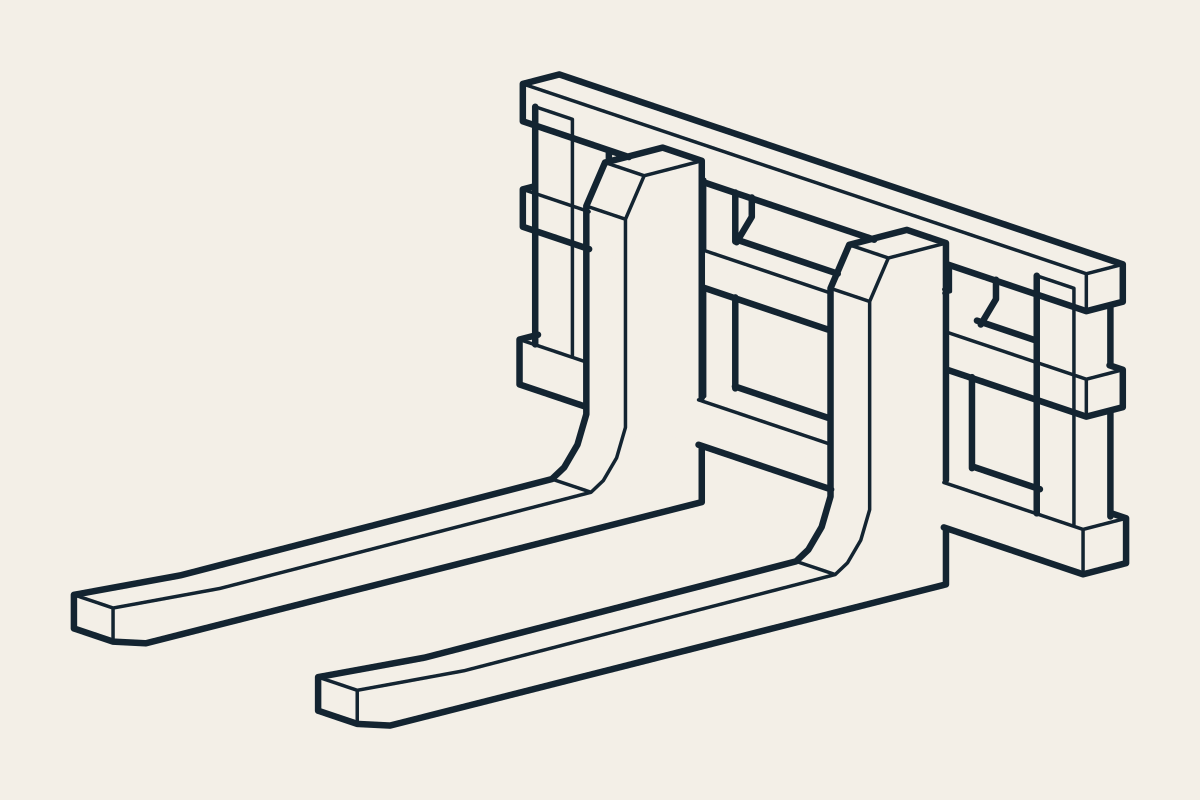
Start here for: palletized masonry, lumber, pipe, and unit loads.
For palletized masonry, lumber, pipe, and unit loads. You'll need the load's weight, dimensions, and center, plus the carriage's identity and the tine rating, length, section, and spacing. Compare telehandler fork carriages and tines.
Truss booms, jibs, and hooks
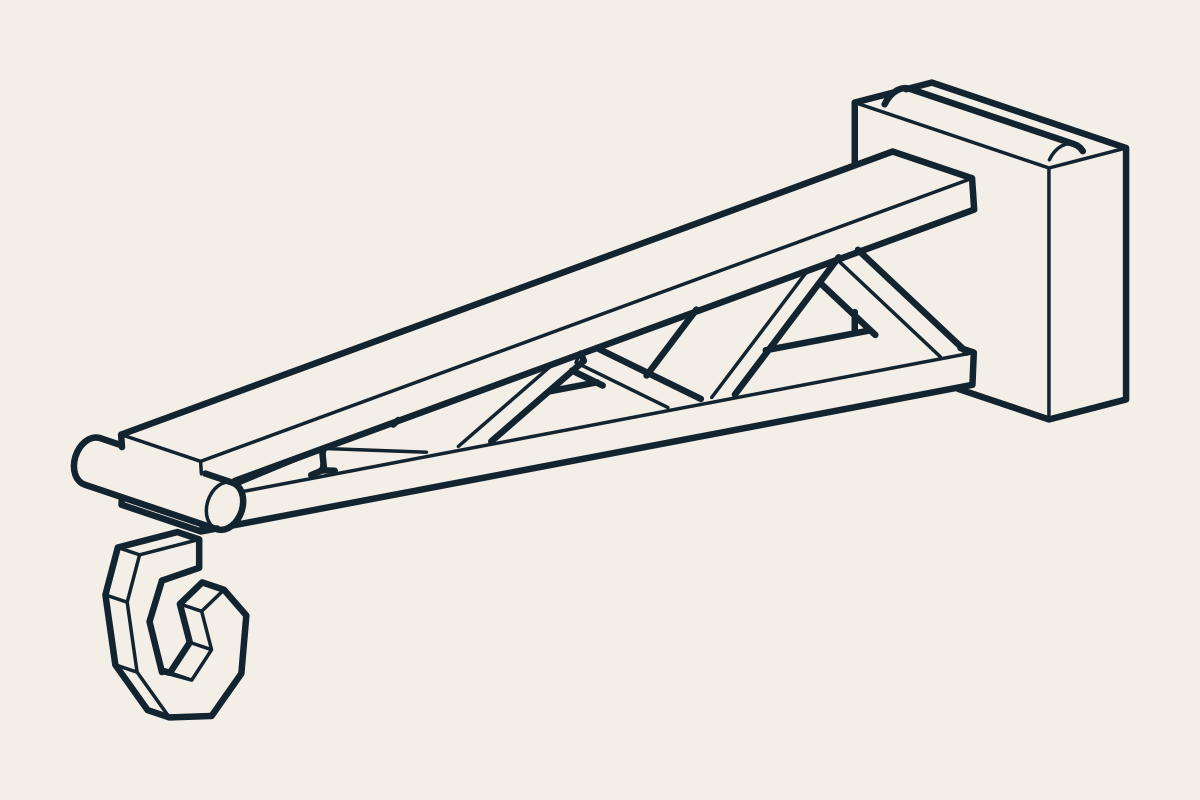
Start here for: suspended and placement work.
For suspended and placement work. You'll need the hook point and extension, the attachment and rigging weight, and the load and its center. Account for how far the load center sits from the machine in each case. Compare telehandler truss booms, jibs, and hooks.
Buckets
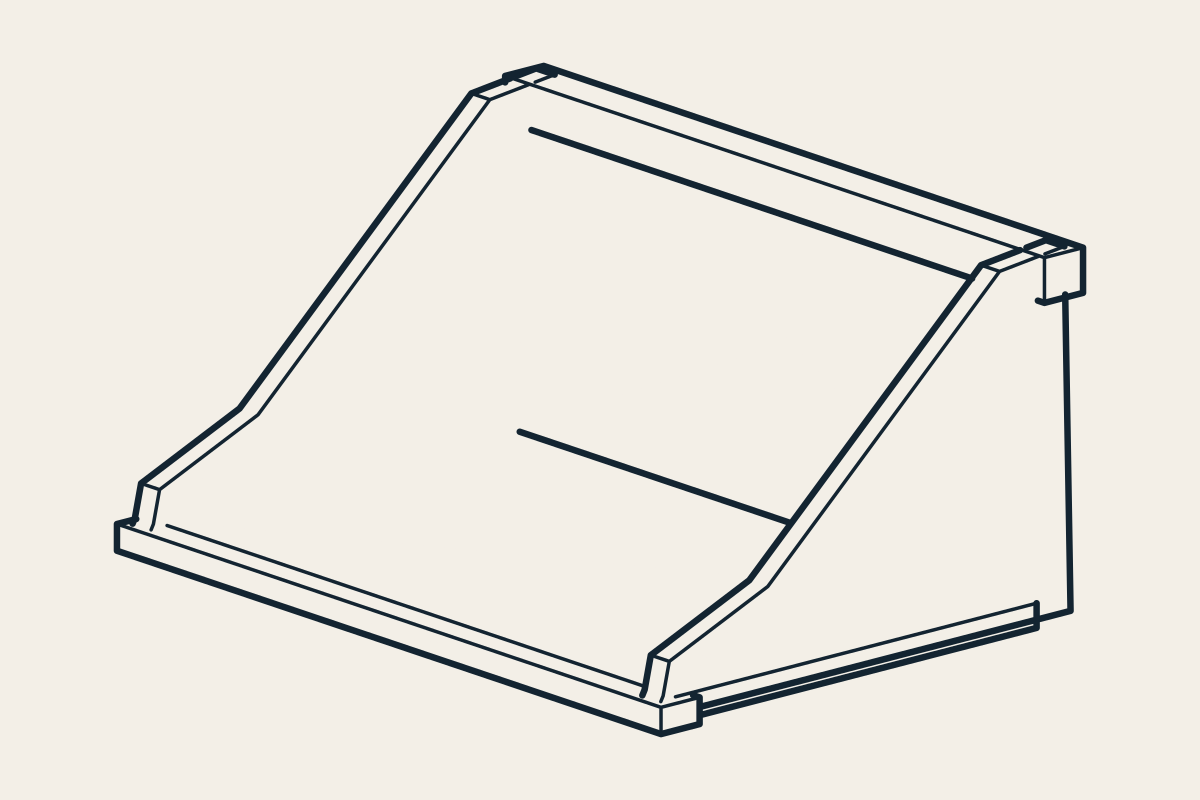
Start here for: loose material.
For loose material. You'll need the material and density, bucket weight, volume, and geometry, the coupler, visibility, and controls. Bucket volume is not allowable load. Compare telehandler buckets.
Specialty material handling
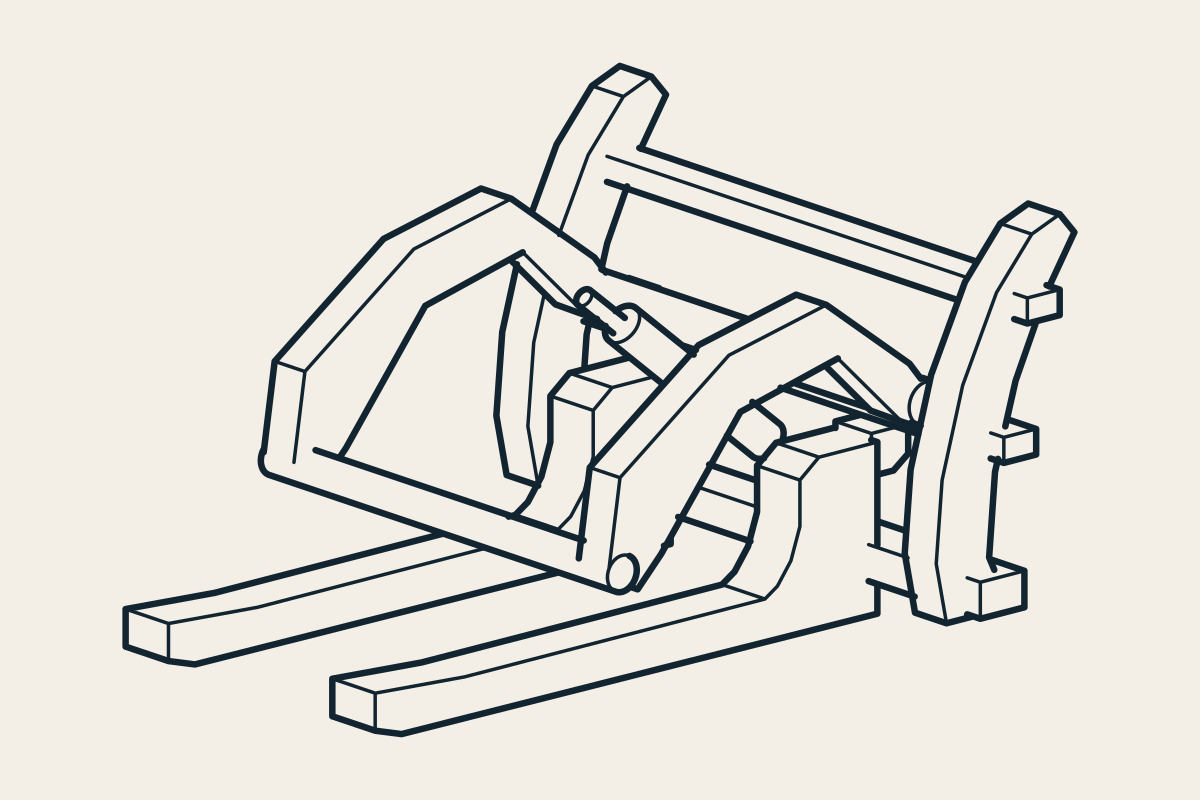
Start here for: pipe, poles, logs, sheet goods, bales, silage, and other irregular loads.
For pipe, poles, logs, sheet goods, bales, silage, and other irregular loads. You'll need the shape, dimensions, weight distribution, retention, attachment weight and controls, and visibility. Compare telehandler specialty material handling.
Prepare your quote
What changes the choice
Choose by job:
| Job or load | Attachment path to investigate | Facts that decide the request | Immediate stop condition |
|---|---|---|---|
| Palletized masonry, lumber, pipe, or unit loads | Standard, side-tilt, side-shift, fork-positioning, or other approved carriage with the correct tines | Load weight/dimensions/center, carriage identity/weight, tine rating/length/section/spacing, machine/chart | Chart, fork stamps, carriage plate, or load data is missing |
| Suspended or placement work | Approved truss boom, jib, material-handling arm, or lifting hook | Hook point/extension, attachment and rigging weight, load/center, reach/height, chart, applicable rules | No attachment-specific chart or approved suspended-load path |
| Loose material loading | Approved general-purpose, light-material, 4-in-1, snow, or other bucket variant | Material/density, bucket weight/volume/geometry, coupler, visibility, controls, bucket chart | Bucket volume is being treated as allowable load |
| Pipe, poles, logs, sheet goods, bales, silage, or other irregular loads | Approved specialty fork, grapple, retainer, handler, or agricultural tool | Shape, dimensions, weight distribution, retention, attachment weight/controls, visibility, chart | The product category is known but the approved variant is not |
Both makers publish broad attachment catalogs, but availability is by model — not every pictured attachment works on every model. Use the catalog to see what's possible and shape your request, but don't treat something as approved just because it's listed there. 4 5
What we need for useful quotes
Build a full machine profile from the machine plate, the serial-specific operator's manual, and any option or chart records:
- Identity — Maker, model, product identification/serial number, year if it matters. Model names and serial breaks can change charts, couplers, controls, and available options.
- Machine class — The maker's own compact, standard, high-capacity, or rotating label. A class routes research; it is not a universal capacity band.
- Coupler or mount — Type/model, revision, latch method, adapter, and attachment-side pins. "Quick attach," "TH coupler," and similar labels don't define all geometry.
- How the machine's set up — Tires, stabilizer/outrigger state, frame level, ballast, and other chart-defined options. The applicable chart can depend on this.
- Boom position — Desired load height and horizontal reach, plus obstacles and placement geometry. Capacity varies across the working envelope; the chart maps boom angle and extension to zones 6.
- Power and controls — Auxiliary flow and pressure, circuit and connector, electrical controls, recognition system. Powered attachments, grapples, buckets, and couplers need the supported functions.
- Governing records — Current operator's manual, attachment approval, capacity chart, plates/labels, and conditions. These records tie the machine and attachment to a safe, approved path.
Everything lines up when the attachment's type, weight, and dimensions fit the chart data, the chart matches your machine, and your machine has the auxiliary hydraulic and electrical capability a powered attachment needs. 1
Automatic attachment recognition is not a substitute for approval. On machines that have it, the system identifies an attachment and shows the matching chart; availability and function depend on the model and configuration. 7
Keep the attachment and the load separate. For the attachment, give us the maker, model, variant, part number, serial or revision, mount, operating weight, dimensions, load center when given, rated capacity and its load-center basis, and any hydraulic or electrical needs. For the load, give us total weight and rigging, size and shape, load center, balance and retention, whether it can swing, shift, or block your view, and the pickup and placement height, reach, and ground, slope, and site conditions for a qualified review.
For fork-mounted attachments, the chart weighs the attachment, rigging, and load together, using a maker-specific equivalent-load method when it applies. We don't reproduce that calculator here. 1 Never subtract attachment weight from a headline machine rating to invent a capacity you can't support. More detail lives in the how telehandler attachment approval and load charts work guide.
If you're lifting a load, your machine's load chart and the maker's approval govern what's safe — check both. OSHA requires the maker's written approval before any modification that affects capacity or safety. 3
Common mistakes
- Don't treat a shared coupler or physical connection as approval.
- Don't use the machine's advertised capacity instead of the chart for the attachment and configuration.
- Don't leave the attachment, adapter, forks, rigging, or load center out of the review.
- Don't assume a longer fork, wider carriage, bucket, or boom extension leaves capacity unchanged.
- Don't treat a tires-up chart condition the same as a stabilizers-down one.
- Don't rely on automatic attachment recognition to approve an unrecognized attachment.
- Don't order a powered attachment without confirming hydraulics, electrical controls, hose routing, and labels.
- Don't take a product photo or a third-party listing as proof of fit.
- Don't order before packaged dimensions, unloading, installation, and chart and label supply are planned.
Scope
This page covers attachments for fixed-chassis telehandlers in U.S. construction, agriculture, and industrial work. It helps you choose an attachment type and prepare a useful quote request. It does not confirm that a specific attachment fits your machine.
Frequently asked questions
Does an attachment fit if it connects to the telehandler coupler?
Connecting is only part of it. Fit also depends on the attachment, the machine and its configuration, the applicable chart, weight and geometry, load center, power and controls, and labels. A supplier needs to confirm the combination.
Does the machine keep its advertised capacity with a different attachment?
Don't assume so. Use the chart for the attachment and configuration and the lower applicable attachment, fork, or machine limit set by the current manual. This site does not calculate retained capacity. 2
Can I use a skid-steer attachment through an adapter?
Only where there's a documented approval path for the adapter, attachment, machine, controls, and chart. One maker, for example, lists one adapter for one model; that's not evidence that any skid-steer attachment becomes approved. 5
What should I send with a request?
Photos of the machine and attachment plates, model and serials, the installed coupler, chart and manual identifiers, configuration and options, load weight, dimensions, and center, intended height and reach, powered-function details, destination ZIP, and purchase timing.
Get a quote
Ready for a quote?
Tell us your machine and the job. We'll take it from there.
Sources
The markers in the text link to the sources below.
- 1
- 2
- 3U.S. OSHA29 CFR 1926.602
- 4
- 5
- 6
- 7