Backhoe Loader Attachments
Decide which end you're attaching to first — the front-loader or the rear-excavator. Use this page to pick a starting attachment type and put together a useful quote request.
The first question is not what fits a backhoe. It's which end the attachment connects to — the front-loader position or the rear-excavator position. Those two ends use different mounts, geometry, hydraulic paths, controls, capacity and stability rules, and setup requirements. 1 2 3
Attachment types to consider
The same attachment name can mean different things at each end. Decide on the front-loader or rear-excavator position first, then open the matching card below.
Rear buckets
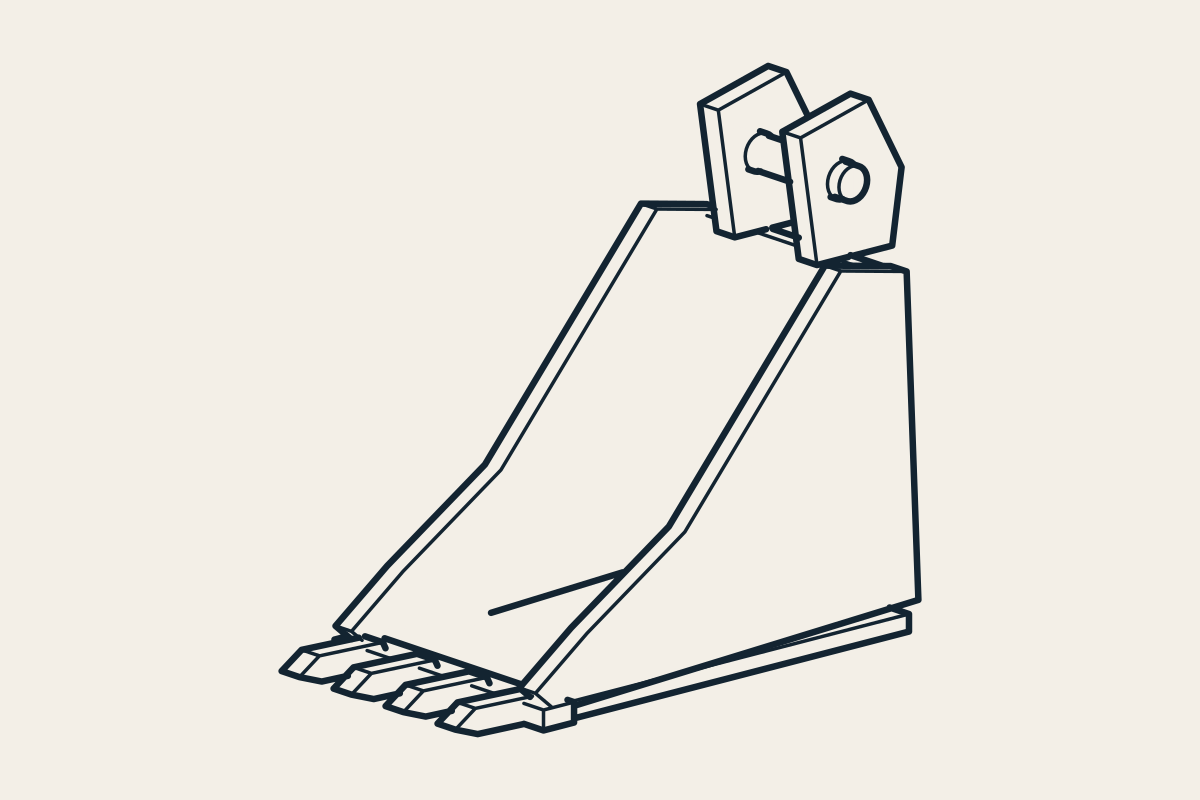
Start here for: rear excavation or finish shaping, matched to the trench or grading width and how hard you'll run it.
Choose a rear bucket by the job — excavation or finish shaping — plus the material, the trench or grading width you need, and how hard you'll run it. Then sort out the machine series and serial range, the dipper and linkage, pin-on or coupler geometry, bucket weight, tooth or edge package, and thumb clearance. You'll see many rear-bucket forms out there — cribbing, ditch-cleaning, grading, heavy-duty, rock, high-capacity, soil-excavation, standard-duty and others. 1
Rear breakers and compactors
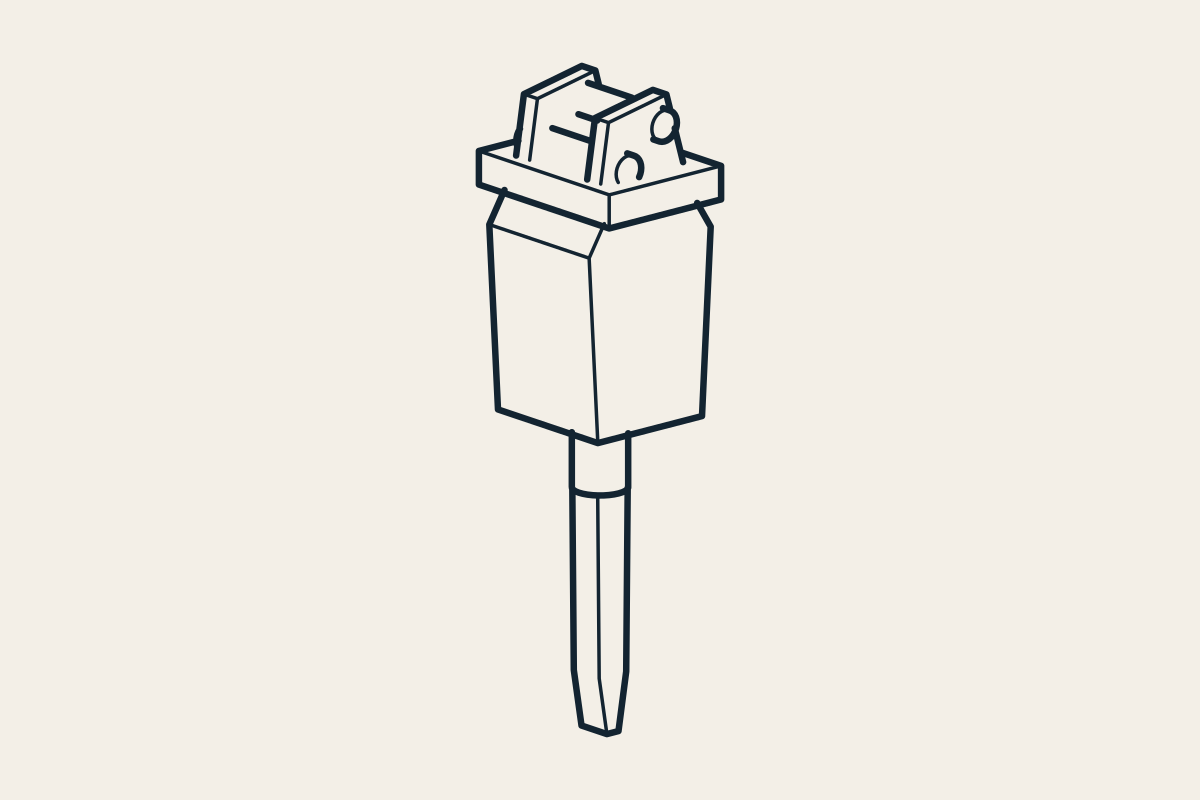
Start here for: rear material-breaking or soil, trench, slope, or surface compaction.
Choose a breaker for the material-breaking work it's built for, and a compaction attachment for the soil, trench, slope, or surface result it's rated to deliver. The attachment still needs the right rear bracket or mount, and the machine's circuit has to match the tool's hydraulic needs. One-way tools — a hammer or vibratory plate — run on different plumbing than two-way tools like an auger or hydraulic thumb. That split comes from one manufacturer's example, not a universal rule for every product. 5
Augers
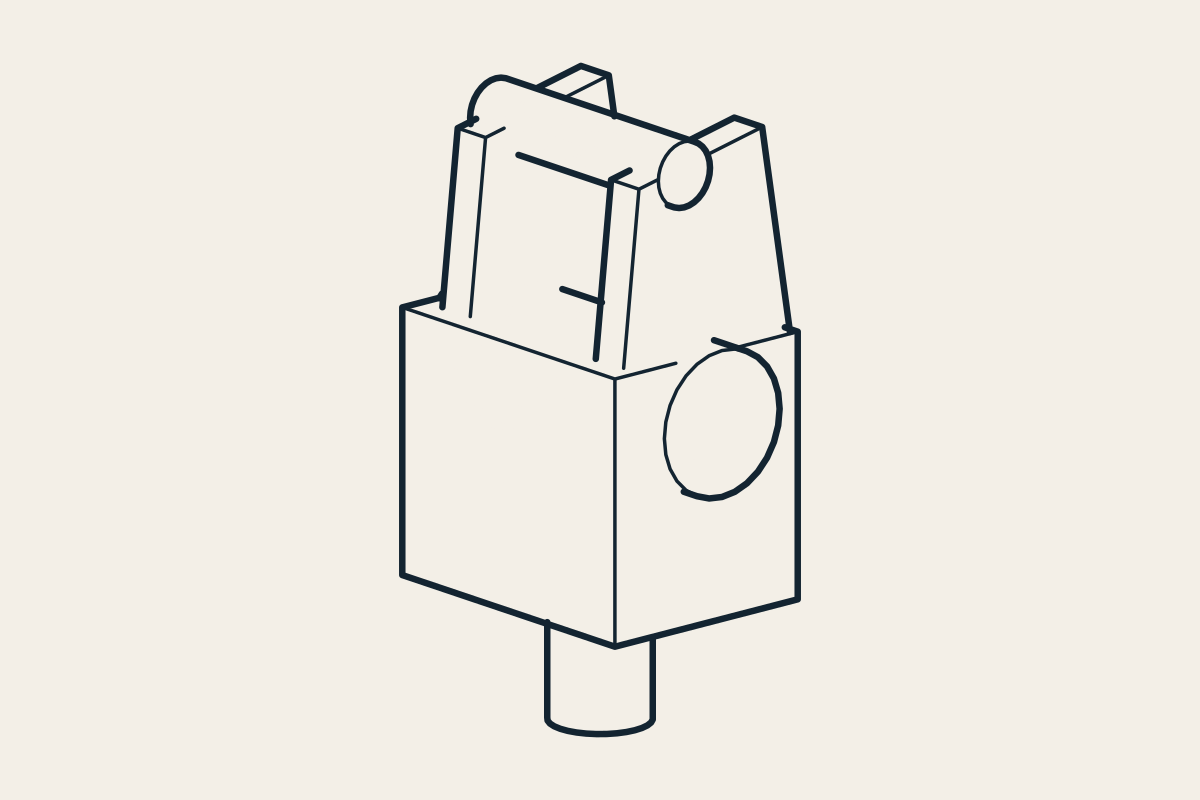
Start here for: front or rear augering, with the drive, bit, soil, and mount defined.
An auger request begins with the mounting position, hole diameter and depth, soil or material, obstructions, the drive and bit system, and the hydraulic envelope it needs. Some pin-on augers are built for backhoes, and the same drive name can show up with different brackets or carriers — so the drive name alone doesn't tell you the mount. 6
Front-loader tools
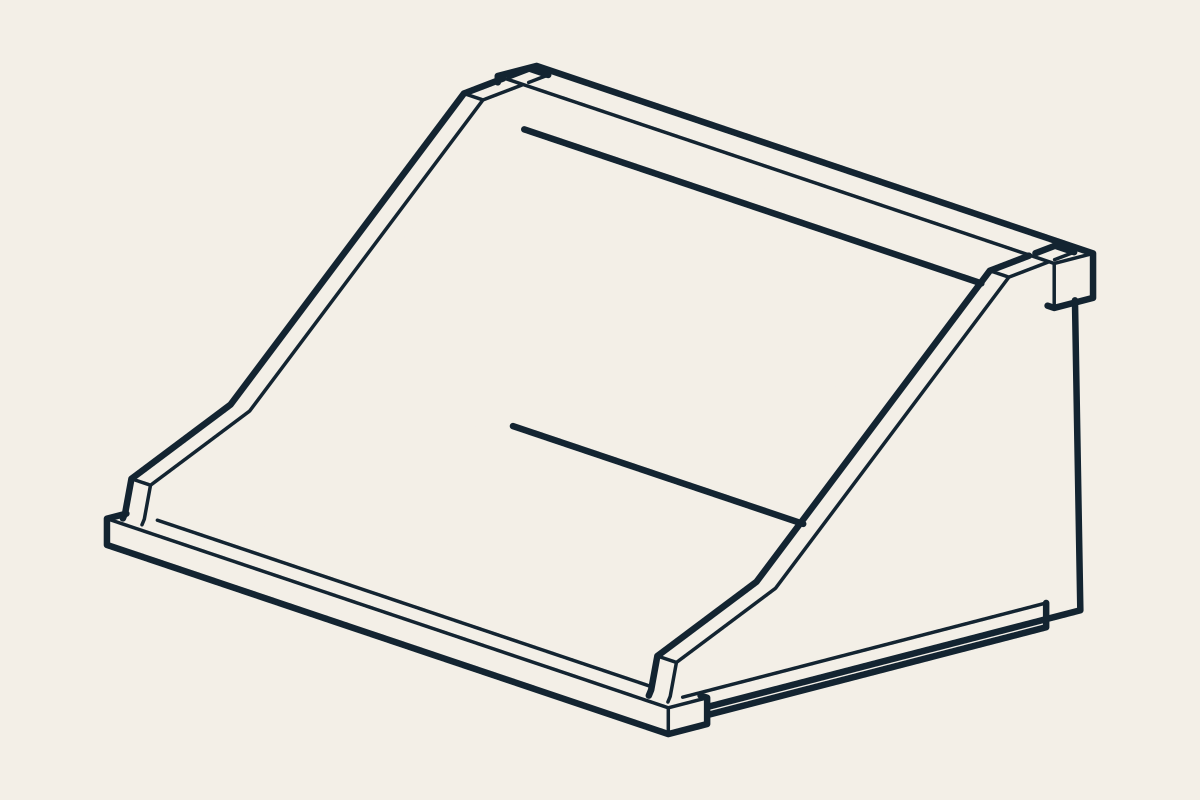
Start here for: front loading, carrying, material handling, or snow jobs.
Front buckets, forks, grapple tools and snow attachments stay on the loader side. You'll find augers, brooms, grapples, pallet forks, snow pushers, and other attachments listed for this machine family, across front bucket, fork, material-handling and snow categories. 1 2 That range doesn't mean any one product fits your make, model, coupler, linkage or hydraulic setup.
Prepare your quote
What changes the choice
Position matters more than attachment name. Use the tables below to pick a starting family and confirm which end your request lives on.
Choose by job
| What are you doing? | Start with | What changes the quote most |
|---|---|---|
| Rear digging and trenching or finish shaping | Rear buckets | Rear-excavator dipper setup, coupling geometry, rear bucket weight, and thumb/work-envelope clearance. |
| Rear breaking or compaction on soil or surface prep | Rear breakers and compactors | Rear hydraulic circuit direction/pressure limits, rear bracket geometry, and rear-work clearance or stabilization. |
| Front or rear augering | Augers | Hole diameter and depth, soil or material, obstructions, drive and bit system, then choose front-loader or rear-excavator flow/pressure, bracket and mount, and clearances for that position. |
| Front loading, carrying, material handling, or snow jobs | Front-loader tools | Front-loader linkage and arm position, front coupler geometry, and operating width and clearance in the intended route. |
Use the position matrix below to confirm whether your request starts from the front-loader or rear-excavator end.
| Position | Start here for | Position-specific facts that control the request |
|---|---|---|
| Front loader | General-purpose or multi-purpose buckets, forks, grapple tools, snow tools, brooms and other manufacturer-supported loader tools | Loader-arm/linkage setup; pin-on or coupler mount; latch and adapter; attachment weight and center of gravity; lift/tipping info for the machine as it's set up; load or material; counterweight, tires and ballast; loader auxiliary functions and controls |
| Rear excavator | Digging and grading buckets, hydraulic breakers, plate or wheel compactors, augers, thumbs and other manufacturer-supported rear tools | Boom/dipper/linkage setup; standard or extendible dipper; pins, coupler and bracket; attachment weight; stabilizer setup; work envelope and clearances; rear auxiliary flow direction, flow, pressure, return/backpressure, hoses and controls |
Front and rear buckets sit in separate groups, and the loader and rear-excavator ends use different couplers. 1 4 A label that shows up at both ends names a category, not one interchangeable mount.
What we need for useful quotes
Record the machine identity once, then fill in only the position-specific fields the attachment needs.
- Manufacturer, exact model, year and private serial number/range — front-loader request: Required; rear-excavator request: Required.
- How the machine is set up, and its weight — front-loader request: Required; rear-excavator request: Required.
- Mounting position recorded as front-loader or rear-excavator — front-loader request: Front-loader; rear-excavator request: Rear-excavator.
- Loader arm/linkage or boom/dipper/linkage setup — front-loader request: Loader arm/linkage; rear-excavator request: Boom, dipper and linkage.
- Coupler, adapter or pin-on mount — front-loader request: Required; rear-excavator request: Required.
- Coupler issuer, model, revision, latch and required hydraulics — front-loader request: If installed; rear-excavator request: If installed.
- Pin diameters, centers and ear width — front-loader request: Only if the mount needs them; rear-excavator request: Needed for a measured pin-on fit — but measuring alone doesn't prove fit.
- Auxiliary flow, pressure, circuit direction and controls — front-loader request: Powered front tools only; rear-excavator request: Powered rear tools only.
- Return/backpressure, case drain and hose/coupler requirements — front-loader request: When the tool calls for them; rear-excavator request: When the tool calls for them.
- Attachment weight as installed, and center-of-gravity info — front-loader request: Required; rear-excavator request: Required.
- Capacity/stability facts — front-loader request: Loader lift/tipping data, load center, counterweight, tires and ballast that apply; rear-excavator request: Dipper position, reach, stabilizer setup, work-tool limits and the machine's relevant specs.
- Clearance — front-loader request: Arms, linkage, tires, hood, coupler, hoses and load; rear-excavator request: Linkage, boom/dipper, thumb, coupler, hoses, stabilizers and work envelope.
Your machine's numbers are tied to how it's actually set up — the stick, buckets, tires, counterweight and other installed equipment. Loader gear, rear gear, couplers, and auxiliary plumbing all get listed separately. 7 8 That's why a bare model name can't stand in for the machine you actually have.
Before you ask a supplier for a decision, run the attachment matching guide — four things have to line up: the mount and geometry, power and controls, the machine's capacity and stability for that setup, and whether the maker approves that tool and setup. If any of these can't be pinned down, the honest state is "a supplier needs to confirm this." A coupler that clicks on doesn't close the hydraulic, capacity, stability, clearance, or approval questions.
Delivery also needs planning: packaged and operating length, width, height, and weight can differ, and pieces may ship separately. See the attachment freight and delivery checklist.
Common mistakes
- Saying "backhoe attachment" without naming the mounting position.
- Ordering a front bucket from rear-bucket dimensions, or the other way around.
- Assuming "pin-on" gives you the pin diameters, centers, ear width, and linkage geometry.
- Treating a coupler family or cross-brand adapter as a reason to skip the coupler details.
- Ignoring the coupler, adapter, thumb, hose kit, or the attachment's weight.
- Comparing a powered tool to total pump flow instead of the correct auxiliary circuit at that position.
- Treating one-way versus two-way flow as the whole hydraulic spec.
- Leaving out whether a rear request has a standard or extendible dipper.
- Using front-loader lift info to approve a rear tool, or rear digging force to approve a front load.
- Leaving the serial number, installed options, or current manual revision out of technical review.
Use the attachment matching guide for mistakes that apply to every machine and attachment, and keep these backhoe-specific checks above with your quote.
Scope
This page covers attachments for purpose-built backhoe loaders in the U.S. market, at both the front-loader and rear-excavator positions. It helps you choose an attachment type and prepare a useful quote request. It does not confirm that a specific attachment fits your machine.
Frequently asked questions
Are front and rear backhoe attachments interchangeable?
Don't assume they interchange. The two positions use different machine structures, mounts, geometry, capacity and stability rules, and often different hydraulic paths. Fit has to be confirmed for that position, that attachment, and your machine's setup.
Does "quick coupler" tell you the mount?
No. Record the coupler maker, model, revision, mating system, latch, how it's installed on the machine, and the geometry on the attachment side. Different makers build several front and rear coupler setups, and they aren't interchangeable. 3 4
Can an excavator attachment fit the rear of a backhoe?
Only when reliable documentation covers the attachment, the mount, and your backhoe's setup. Some makers do build specific cross-platform systems — for example, one pin-puller coupler is built for named backhoe classes and 7–9-ton mini-excavator attachments — but that narrow case can't be generalized. 9
What hydraulic information belongs in a request?
For the front or rear circuit you're using, include measured or documented auxiliary flow and pressure, circuit direction, allowable backpressure, return or case-drain requirements, hoses and couplers, the electrical connector, and control functions. Use the documents for your machine and that attachment.
Does this page confirm fitment?
It gets the information ready for a supplier and qualified review. It doesn't tell you whether a specific attachment fits your machine — that's the supplier's call.
Get a quote
Ready for a quote?
Tell us your machine and the job. We'll take it from there.
Sources
The markers in the text link to the sources below.
- 1CaterpillarBackhoe Loader Attachments
- 2CASE Construction EquipmentBackhoe Loaders
- 3CASE Construction EquipmentCoupler Attachment
- 4John DeereConstruction Equipment Attachments
- 5CaterpillarBackhoe Loader Hydraulic Flow Switch
- 6CaterpillarA68 Pin-On Auger
- 7Caterpillar416 Center-Pivot Backhoe Loader
- 8John Deere310 P-Tier Backhoe Loader
- 9Caterpillar415–444 Backhoe Loader Pin-Puller Coupler