Excavator and Mini Excavator Attachments
Start with the work: digging, breaking, grabbing, cutting, or changing tools fast. Which attachment your excavator can actually run depends on the machine in your yard, not its tonnage. Buckets, breakers, couplers, and grapples each need a different set of facts before anyone can quote.
Start with the work: digging and loading, breaking concrete, grabbing scraps and brush, or changing tools fast. Each job points to a different attachment family, and which one your machine can actually run depends on the exact machine in your yard, not its tonnage.
Attachment types to consider
Buckets
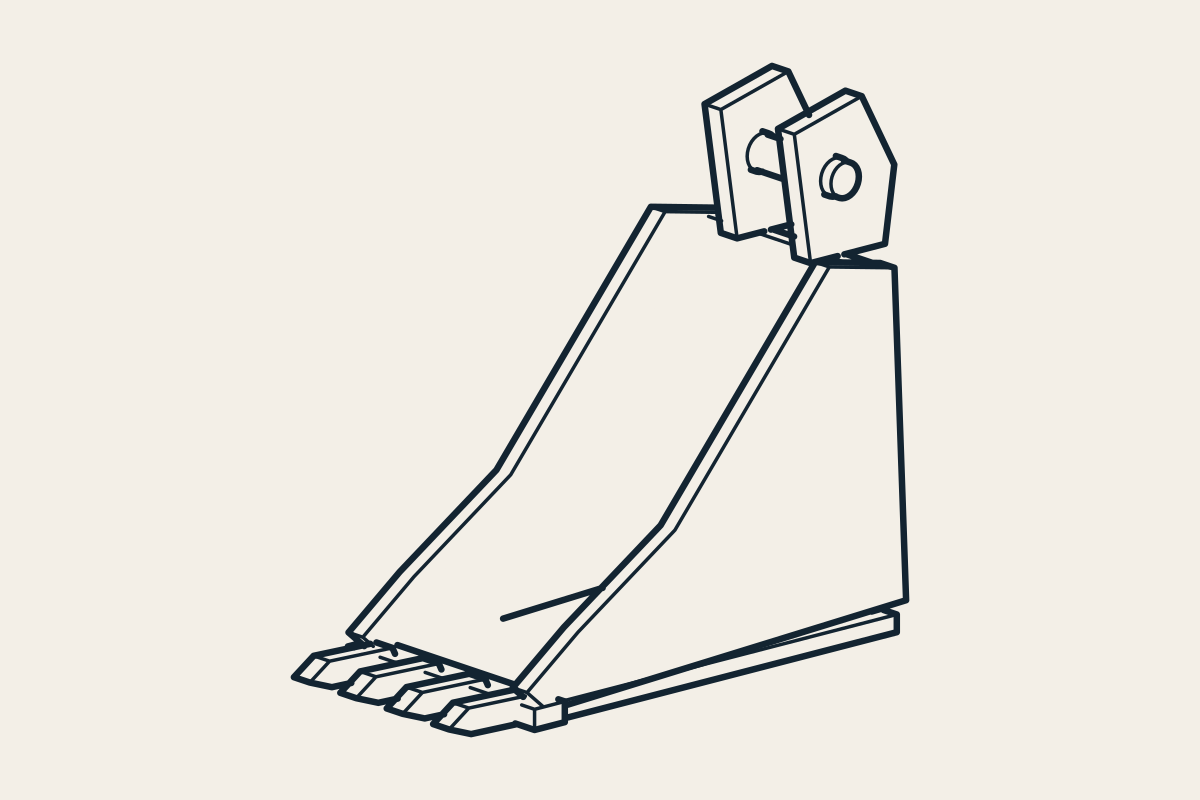
Start here for: digging, loading, grading, ditch cleaning, or abrasive material.
Buckets handle digging, loading, grading, ditch cleaning, and abrasive material. A bucket name tells you the job, not the fit — durability and specialty lines each come with their own mount, width, capacity, and weight. 2 Compare excavator and mini excavator buckets.
Hydraulic breakers
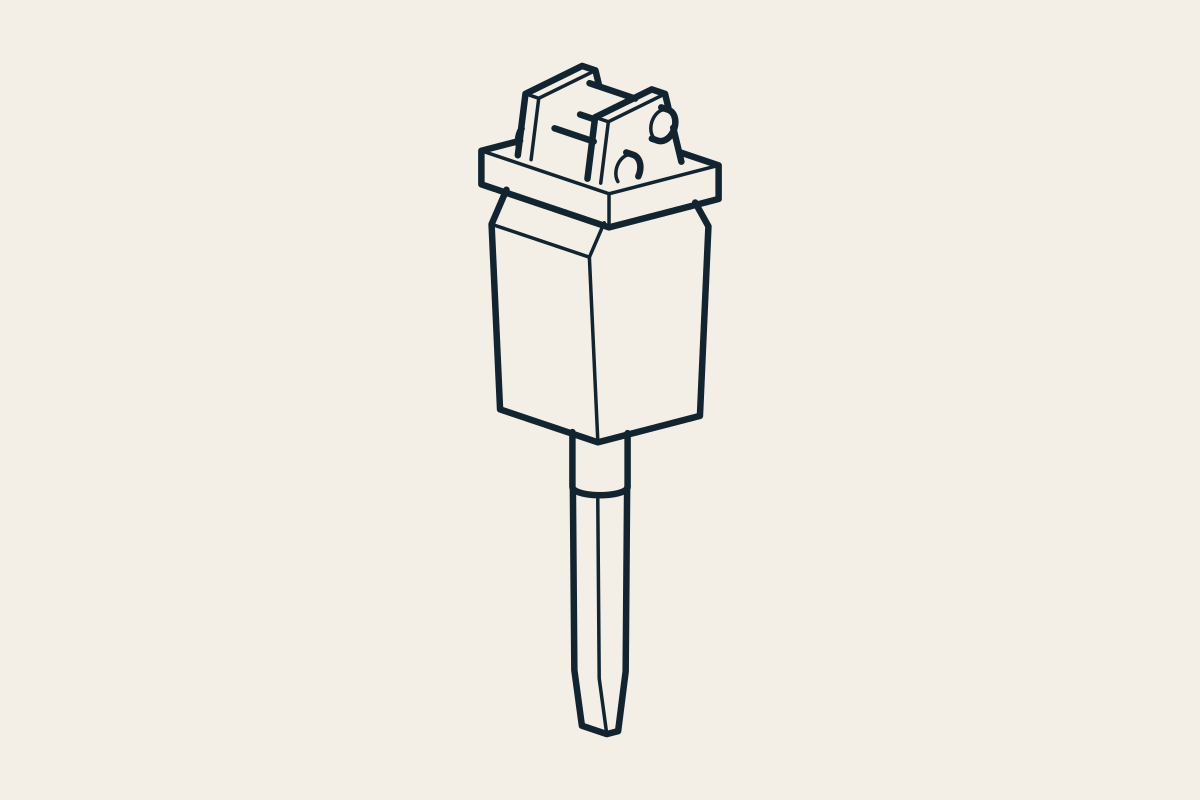
Start here for: breaking concrete, asphalt, rock, or frozen ground.
Break concrete, asphalt, rock, and frozen ground. A breaker is sized to the machine by a published weight class, service weight, oil-flow range, and operating-pressure range — each set per model, not as a universal tonnage chart. 3 Prepare an excavator hydraulic-breaker request.
Couplers, thumbs, and tilt systems
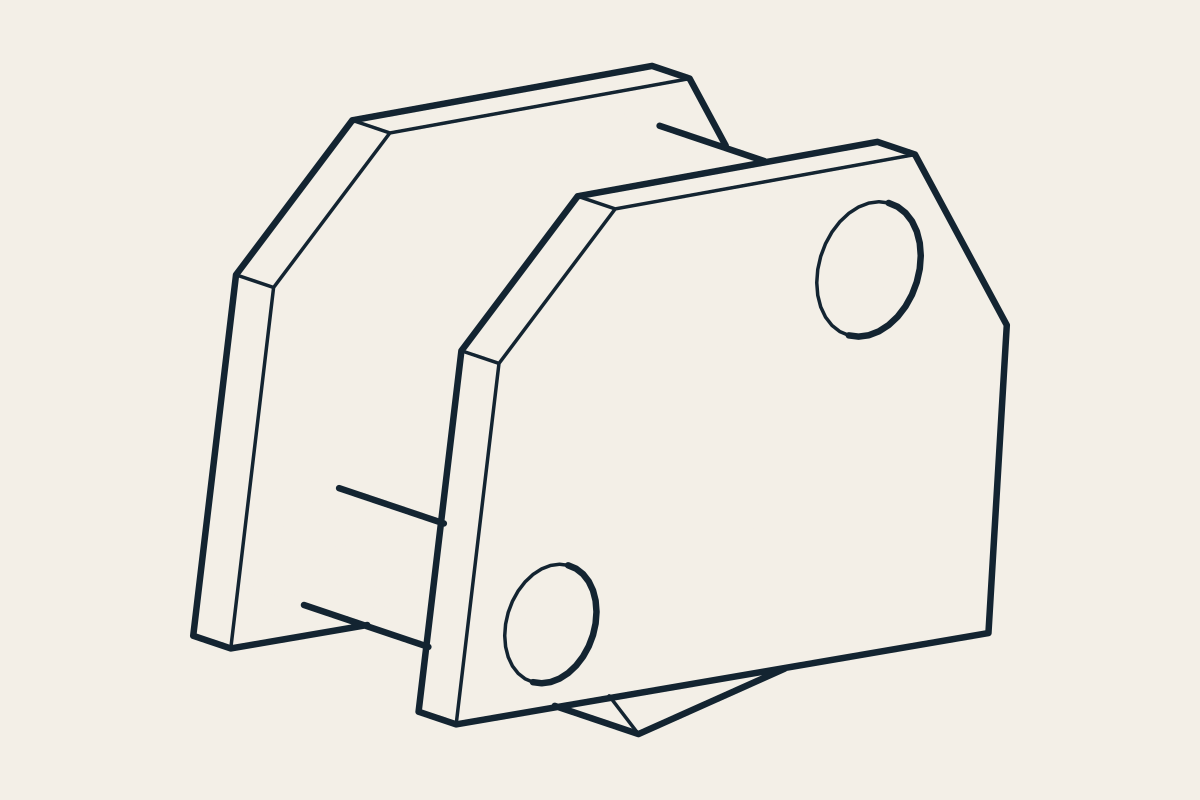
Start here for: faster tool changes, grasping with a bucket, or adding tilt or continuous rotation.
For faster tool changes, grasping with a bucket, and adding tilt or continuous rotation. A coupler can drop an attachment that is not correctly engaged and retained, so follow the maker's procedure and inspection program. 4 A thumb is built around a specific machine and attachment setup, and its maker requires a model-specific mounting alignment and a fit-and-clearance check at installation. 5 Compare excavator couplers, thumbs, and tilt systems.
Grapples, cutters, and mulchers
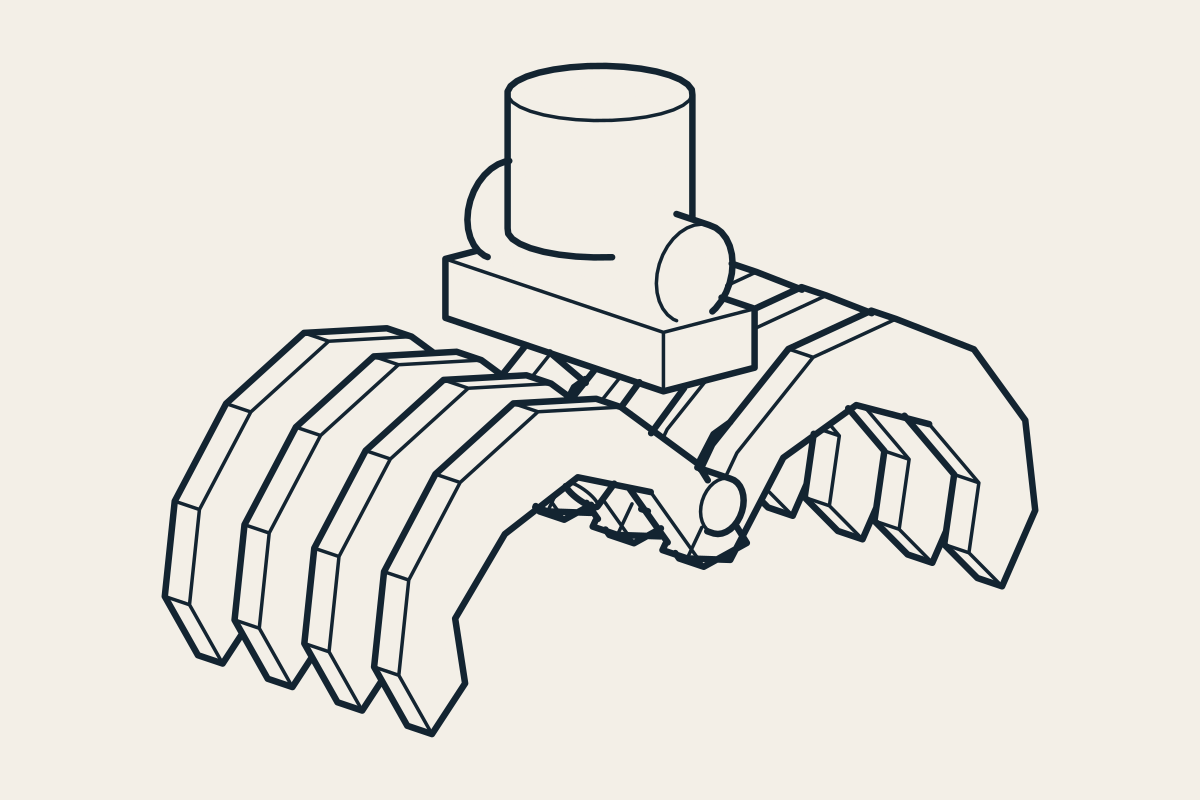
Start here for: sorting demolition debris, handling logs, moving irregular material, or reducing vegetation.
Sorting demolition debris, handling logs, moving irregular material, and reducing vegetation. "Rotating grapple" doesn't tell a supplier what they need — your request has to include the mount, the attachment's weight, grab flow, rotation flow, and whether it uses a second hydraulic circuit. 7 Choose among excavator grapples, cutters, and mulchers.
Prepare your quote
What changes the choice
| What you're doing | Start with | What changes the quote |
|---|---|---|
| Digging, loading, grading or ditch cleaning | Buckets | Material, width and duty, the linkage or coupler, bucket weight, teeth and edge package |
| Breaking concrete, asphalt, rock or frozen ground | Hydraulic breakers | The maker's current machine range for that model, breaker and bracket weight, flow, pressure, allowable backpressure, return routing |
| Changing tools quickly, grasping, tilting or rotating | Couplers, thumbs and tilt systems | Coupler make, model and revision, machine-side and pickup geometry, locking system, controls, installed weight and build height |
| Sorting, handling logs, or cutting vegetation | Grapples, cutters and mulchers | Jaw form and opening, attachment weight, grab and rotation circuits, case-drain requirement for the attachment |
Names describe intended use. A maker's machine range is a starting point, not approval. Check your machine's own spec sheet, too: the auxiliary circuits are listed separately, you won't get maximum flow and maximum pressure at the same time, and counterweight, stick, and track options change the numbers. 1
What we need for useful quotes
Work from the machine data plate, the current operation and maintenance manual, the option record, and dealer or maker technical information. What you enter helps a quote request along; it is not itself a confirmation of fit.
- Machine identity — Make, model, model year where it matters, product identification or serial number. If you can't identify the model or configuration, a supplier can help.
- Machine class — The maker's own class: mini, crawler or wheeled. Never assign a universal "mini" weight cutoff; if unsure, ask the maker.
- How the machine is set up — Operating weight basis, counterweight, undercarriage or tire setup, blade or stabilizer state, boom and stick 1. If the machine's setup is unclear, a supplier can help.
- Mount — Pin-on geometry, or the coupler make and model. If the mount isn't clear, a supplier can help.
- Primary hydraulics — The actual available flow range and pressure at the attachment circuit, plus circuit direction and control mode. If only a marketing label like "high flow" is known, a supplier can help.
- Return and drain — Allowable return backpressure, direct-to-tank requirement, case-drain availability and connector. If the required line is unavailable or unverified, a supplier can help.
- Secondary hydraulics and controls — Second auxiliary circuit, electrical connector, controller, proportional or rotation functions. If the controls are not defined, a supplier can help.
- Attachment facts — Make, model or attachment, part number, bracket or mount, total installed weight, and how tall it sits once installed if supplied. If the attachment can't be tied to current maker data, a supplier can help.
- Job and environment — Material, desired finish, how you'll use it, working position and angle, reach, slope, overhead or underground limits, site rules. For lifting or safety-critical work, get qualified review.
If any value above is blank, a supplier needs to confirm this. The four things that have to line up are the mount and geometry, the power and hydraulics, the machine's weight and stability, and whether the maker approves the combination. Use the attachment matching guide.
Mass, reach, and stability come together in one check: ask for the total installed weight — attachment, coupler or bracket, adapter, tool, hoses, and any control hardware — then compare that package against the machine setup for the planned working position. A tiltrotator data sheet lists both attachment weight and installation height, and a current machine spec identifies counterweight and stick options separately. 6 1
Machines do not deliver maximum flow at maximum pressure at the same time. 1 Compare the attachment's permitted flow, pressure, backpressure, drain, and return against the actual circuit in the mode you'll use. Whether a tool needs a case drain varies by the model — one current vegetation-tool range includes a cutter with no case drain and a drum mulcher that needs one. 8 See the hydraulic flow, pressure, backpressure, return, and case-drain guide.
For a pin-on attachment, record both pin diameters, the pin-center distance, and the inside width between the attachment ears — that's four separate measurements a supplier will want. 9 Measurements narrow the mount question but do not prove full fit; use the excavator bucket and coupler measurement guide to prepare the record.
Sort out shipping before you accept a delivered quote: packaged length, width, height, and weight, piece count, origin and destination ZIP codes, delivery condition, and your unloading capability. 10 Work through the attachment freight and delivery checklist.
Common mistakes
These are the excavator-specific ones. The mistakes that apply to every machine and attachment are in the attachment matching guide.
- Shopping by machine tonnage alone.
- Treating a model name, a photo, "pin-on," or "quick attach" as a complete mount.
- Measuring one pin but not both pin diameters, pin centers, inside ear width, linkage and clearance.
- Comparing attachment flow with total pump flow instead of the auxiliary circuit you'll actually use.
- Ignoring return backpressure, a case drain, a second circuit, or electrical controls.
- Comparing bare attachment weight on one quote and installed weight on another.
- Assuming a coupler, thumb, tilt system, or adapter leaves the machine's reach and stability unchanged.
- Treating a physical connection as approval to lift or operate.
- Ordering before the quote defines brackets, pins, hoses, couplers, controls, setup, shipping, and unloading.
Scope
This page covers attachments for mini, crawler, and wheeled excavators in the U.S. market. It helps you choose an attachment type and prepare a useful quote request. It does not confirm that a specific attachment fits your machine.
Frequently asked questions
Will an attachment fit if it is advertised for my excavator's tonnage?
No. Tonnage alone cannot tell you. A maker's machine range is a useful starting point, but the mount, hydraulics, installed weight, machine setup, and the work itself still have to be checked. That's one for the supplier.
Is a pin-on attachment easier to match than a coupler attachment?
It is a different thing to check, not automatically an easier one. Pin-on matching needs the full linkage geometry and setup. Coupler matching needs the machine-side connection, the coupler and its controls, and the supported attachment pickup geometry.
Do all powered attachments need a case drain?
It depends on the attachment and hydraulic setup. Current maker examples include both tools that need a case drain and tools that do not. 8
Can measurements confirm a bucket or coupler fits?
Measurements narrow the mount question and make a quote request more useful. They cannot prove the other things that have to line up, account for every tolerance or wear condition, or replace the maker's approval.
What should I send with a quote request?
Send the machine and attachment identification, clear photos of the plates and mount, the pin or coupler record, the actual auxiliary circuit data, the operating setup, the job and material, the destination ZIP, how you will unload, and your purchase timing.
Get a quote
Ready for a quote?
Tell us your machine and the job. We'll take it from there.
Sources
The markers in the text link to the sources below.
- 1
- 2
- 3
- 4U.S. Occupational Safety and Health AdministrationHazards of Inadequately Securing Hydraulic Excavator Buckets When Using Quick Coupling Devices,” SHIB 07-22-2005
- 5
- 6SteelwristSteelwrist X14 tiltrotator,” X14-INT-18
- 7
- 8Blue Diamond AttachmentsMini Excavator Brush Cutter – Severe Duty Series 2” and “Excavator Drum Mulcher — Heavy Duty
- 9Spartan EquipmentExcavator Mount Measurement Sheet
- 10