Browse Heavy-Equipment Attachments by Machine and Job
Choose your machine first, then narrow by job, material, mount, power, capacity, and whether the maker approves it before requesting a quote.
Start with the machine that'll carry the attachment. Then define the job and material, pick a plausible attachment family, and check that attachment against four things that have to line up: mount, power and controls, machine performance, and whether the maker approves it. A category can fit a machine family without any particular product being in stock or actually compatible.
Request a quote for my machine or read the compatibility checklist.
Browse by machine
Pick the machine that'll carry the attachment, then open that family's browse link below to see its types and the jobs to start with.
Skid steer loader or compact track loader
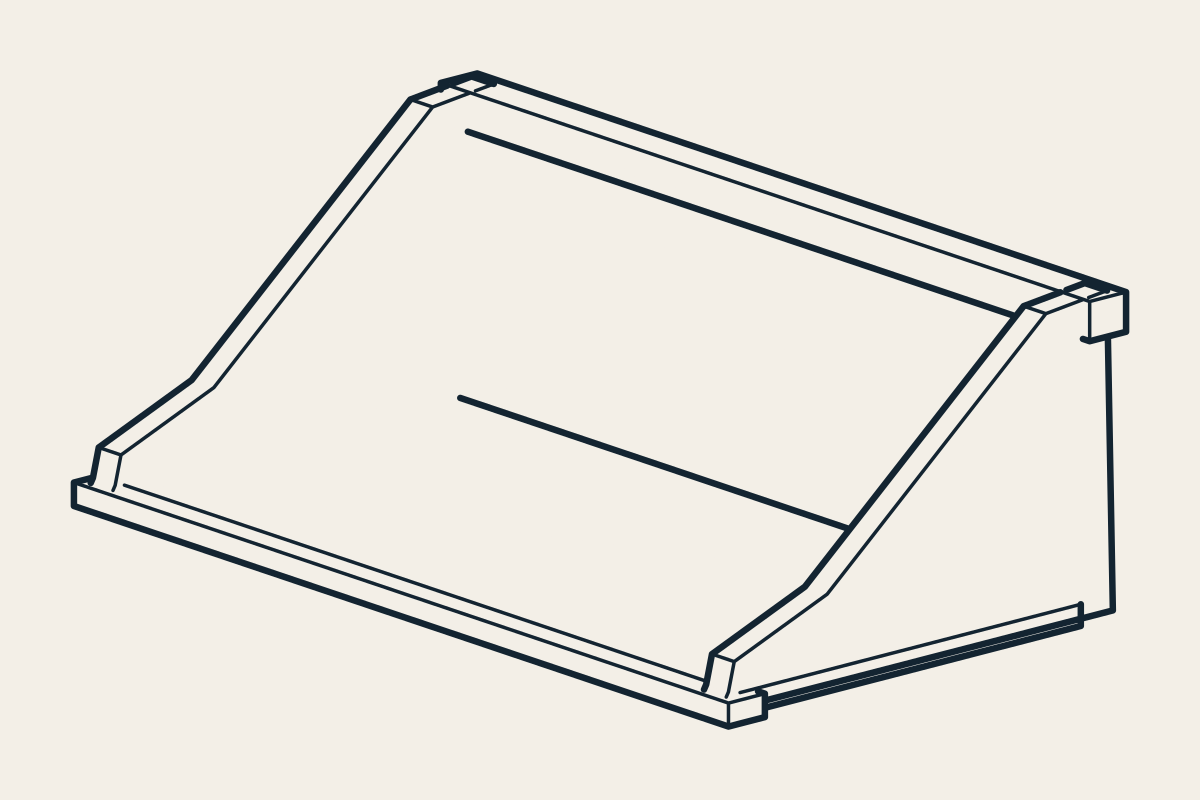
Start here for: digging, grading, brush handling, vegetation work, drilling, or trenching.
Machine-specific information that matters: model and setup, mount, auxiliary hydraulics, controls, attachment weight, cooling, guarding, and job conditions.
Excavator or mini excavator
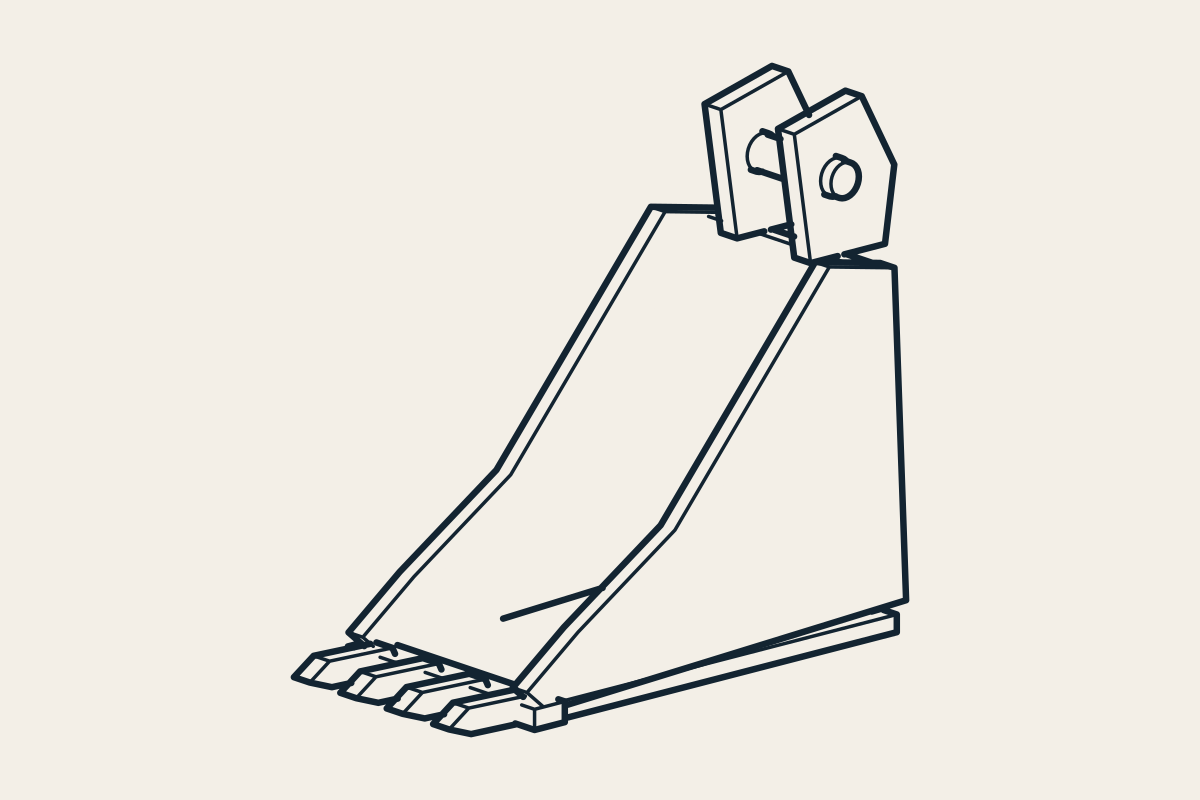
Start here for: trenching, grading, breaking, grasping, tool changing, or clearing.
Machine-specific information that matters: model and serial, boom and stick, pin geometry or coupler, auxiliary circuits, attachment weight, working position, and stability limits.
Wheel loader
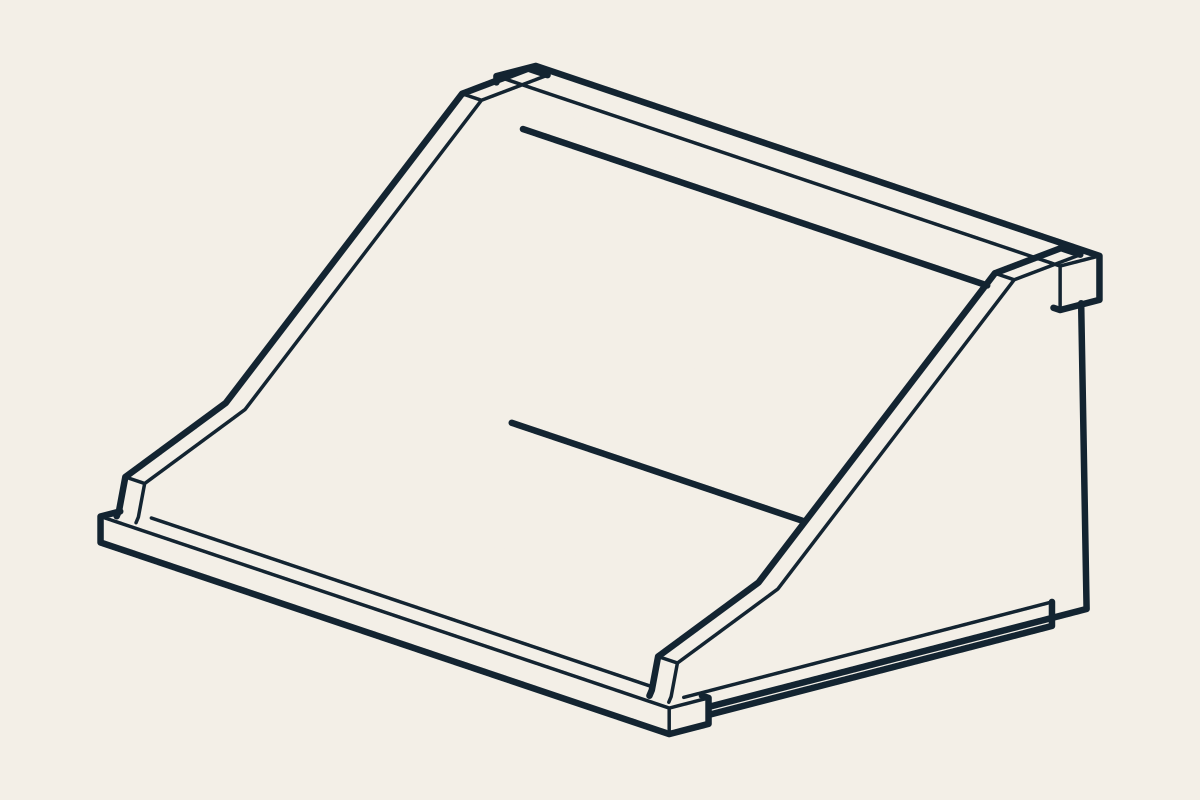
Start here for: bulk loading, pallet or lumber handling, irregular-material handling, or snow work.
Machine-specific information that matters: model and setup, coupler and linkage, material or load, center of gravity, capacity information, and powered functions.
Backhoe loader
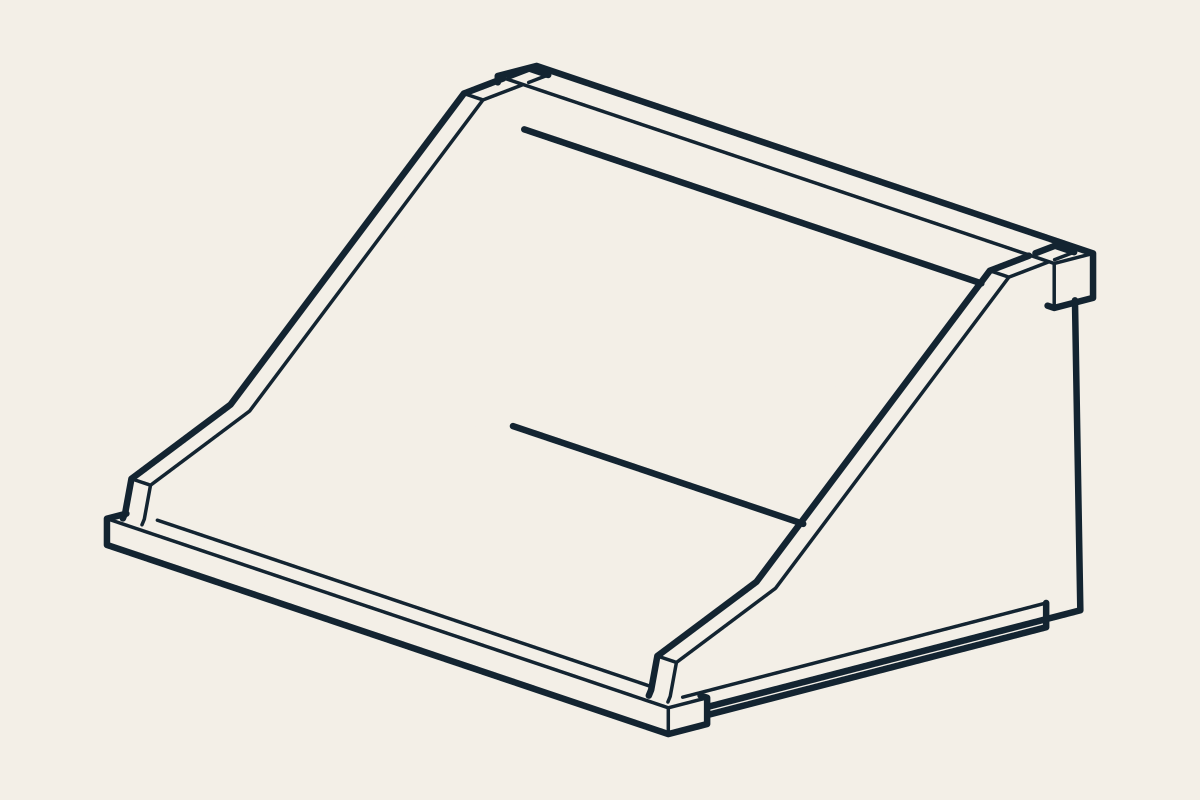
Start here for: front-loader material handling or rear-excavator digging, breaking, compacting, or drilling.
Machine-specific information that matters: machine plus attachment position, position-specific mount, linkage, hydraulics, stabilizers, and how the machine is set up.
Telehandler
Start here for: fork and carriage work, approved lifting tools, buckets, or specialty handling.
Machine-specific information that matters: machine and serial, coupler, attachment identity, load and load center, height/reach, how it's set up, approval, and the load chart.
Browse by job
Job labels help you find the right page. They're not a fit decision, and they don't promise we have it in stock.
| Job or outcome | Representative launch paths | Questions to answer before choosing |
|---|---|---|
| Dig, trench, or grade | Buckets; augers and trenchers; grading and positioning systems | Material, dimensions, finish, depth or profile, duty, machine setup, mount, and tool geometry |
| Move loose material | Buckets for all five machine families | Material and condition, desired volume, attachment weight, target height/reach, visibility, spill control, and machine limits |
| Handle pallets, lumber, pipe, or irregular loads | Forks and carriages; grapples; thumbs; specialty handling tools | Load weight, dimensions, center of gravity, retention method, lift path, site conditions, and the chart or capacity information |
| Break, compact, drill, or sweep | Breakers, compactors, augers, sweepers | Hydraulic circuit, flow, pressure, return/backpressure, case drain, tool or bit, material, duty cycle, and controls |
| Cut or clear vegetation | Brush cutters, mulchers, clearing tools, grapples | Vegetation, finish, terrain, reach, debris exposure, machine weight, hydraulics, cooling, guarding, and whether the maker approves it |
| Work in snow | Snow blades, pushers, buckets, and other family-specific tools | Snow condition, site geometry, surface, width, trip/float features, visibility, attachment weight, and machine limits |
These job groupings are just for browsing — not separate category pages, filters, or a live inventory list.
Priority attachment families
- Skid steer loaders and CTLs: grapples, brush cutters and mulchers, buckets, and augers and trenchers.
- Excavators and mini excavators: buckets, hydraulic breakers, couplers, thumbs, and tilt systems, and grapples, cutters, and mulchers.
- Wheel loaders: buckets, forks, grapples, and snow-removal attachments.
- Backhoe loaders: front-loader attachments, rear buckets, breakers and compactors, and augers.
- Telehandlers: fork carriages, buckets, truss booms, jibs, and hooks, and specialty material-handling attachments.
These links go to categories, not a list of what's in stock right now.
Prepare your quote
Four things separate a category from a fit
| Compatibility layer | Record and verify | Stop condition |
|---|---|---|
| Mount | Plate, coupler, carriage, pins, latch, adapter, linkage, geometry, and clearance | The mount or required adapter is unknown |
| Power and controls | Actual flow and pressure, circuit direction, allowable backpressure, return/case drain, hoses, voltage, connector, and controls | A powered function has an unresolved hydraulic or electrical requirement |
| Machine performance | Attachment weight and center of gravity, material/load, capacity or stability information, reach, cooling, duty, and how the machine is set up | The proposed load or working position cannot be checked against current machine information |
| Manufacturer approval | Current machine and attachment documents, charts, labels, guarding, kits, conditions, and exclusions | The combination lacks required approval or documentation |
Physical connection isn't enough. Have your machine's hydraulic flow and pressure and the coupler brand/model ready — that's what OEM selection guidance asks for. For a telehandler, the attachment's identity and its capacity information are part of the approval path too. 3 4
For a fuller process, read how to match an attachment to your machine. For powered tools, use the hydraulic flow, pressure, and case-drain guide.
Turn browsing into a quote-ready request
- Machine manufacturer, exact model, year when relevant, and private serial number or range.
- Machine family, configuration, and options that affect the mount, hydraulics, controls, stability, cooling, or guarding.
- Mount details and clear photos or current documents.
- Job, material or load, dimensions, desired result, environment, and how you'll use it.
- Actual hydraulic and electrical information for powered attachments.
- Attachment category or candidate attachment/model, if known.
- Delivery ZIP code, site type, truck access, dock/unloading equipment, and appointment constraints.
- Purchase timing and any required documentation.
Use the freight and delivery checklist before submitting. Keep private serial numbers and documents in the quote request — not in public comments or on a page anyone can see.
Compatibility inputs by machine family
| Family | Mount focus | Power/controls focus | Performance and approval focus |
|---|---|---|---|
| Skid steer / CTL | Quick-attach mount and any adapter | Auxiliary package, circuit direction, return/case drain, hoses and controls | Attachment weight, rated setup, cooling, duty, guarding, and site conditions |
| Excavator / mini excavator | Pin geometry, linkage, coupler and clearance | Circuit availability, flow/pressure, backpressure, return/case drain and controls | Attachment weight, reach, working position, stability, lifting information and required setup |
| Wheel loader | Coupler standard, linkage and locking arrangement | Powered-function circuits, hoses, electrical connector and controls | Material/load, center of gravity, lift/tipping information, visibility and whether the maker approves the setup |
| Backhoe loader | Front-loader or rear-excavator mount and linkage | Position-specific circuits, flow/pressure, return and controls | Stabilizer/loader setup, working position, attachment weight and applicable machine limits |
| Telehandler | Carriage/coupler and attachment identity | Any powered function, connection and controls | Load, load center, height/reach, setup, manufacturer approval and the load chart |
How the taxonomy stays honest
We track three connected things:
- Machine: family → class → make/model → your setup.
- Attachment: family → type → product → the attachment/model.
- Compatibility: a separate record of what we check between that attachment/model and your machine setup, with conditions, exclusions, source, verification date, and confidence.
A synonym can help you find a category, but it can't prove a fit. A measurement you give us can help route your quote request, but it can't be promoted into a public manufacturer approval. Missing facts stay marked a supplier needs to confirm this.
When the answer is "a supplier needs to confirm this"
The route stays a supplier needs to confirm this when your machine setup, the attachment/model, the mount, a hydraulic or electrical fact, a load or application fact, an approval, or a delivery requirement is unresolved. That's useful — it shows what still needs to be collected instead of guessing.
Why the finders work this way
These five families are separate because their mounts, work envelopes, stability questions, and approval paths differ. That's not just us — other equipment makers' attachment finders work the same way, by machine and job, not by attachment name alone. 1 2
Mini skid steers and compact utility loaders are outside this site's current scope. Don't pick the skid-steer/CTL path for one of those machines just because an attachment name looks familiar.
Common mistakes
- Picking an attachment by category name alone without defining the material, the job, and the machine setup.
- Treating "browse by job" labels as fit decisions or as promises that a product is in stock.
- Confusing the machine family a page covers with approval for a specific make, model, serial range, and option package.
- Assuming a familiar mount or hydraulic label proves the whole combination works before checking the four compatibility layers.
Get a quote
Ready for a quote?
Tell us your machine and the job. We'll take it from there.
Sources
The markers in the text link to the sources below.
- 1CaterpillarEquipment Attachment Finder
- 2BobcatAttachments
- 3CaterpillarFive Tips for Choosing Excavator Attachments
- 4